
Very few people think about the billions of microorganisms living inside their mouths.
Yet these microscopic communities influence nearly every aspect of oral health, including breath freshness, plaque development, gum comfort, saliva interactions, and the overall environment inside the mouth.
In recent years, researchers have become increasingly interested in something known as the oral microbiome.
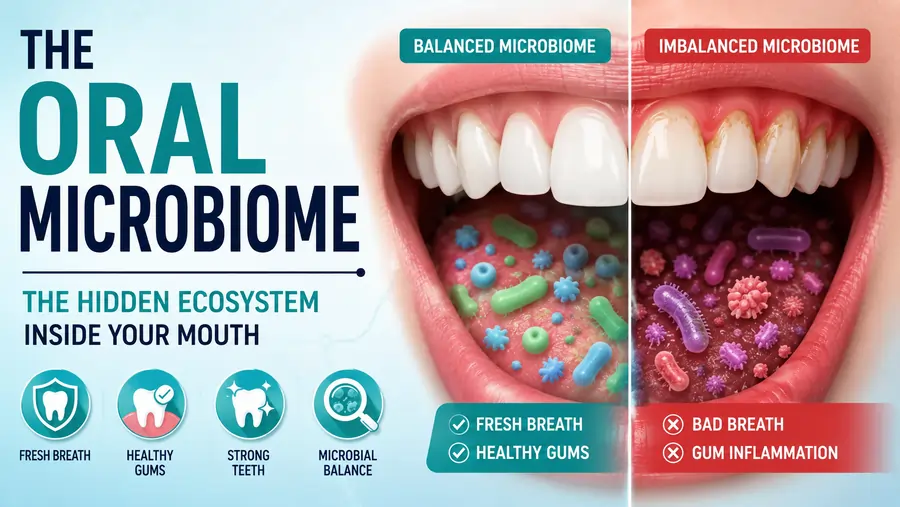
The term may sound complicated, but the idea is surprisingly simple.
Your mouth is not sterile. It was never meant to be sterile.
Instead, it contains a constantly changing ecosystem of bacteria and other microorganisms that interact with one another throughout the day.
Understanding that ecosystem can completely change how you think about bad breath, oral hygiene, mouthwash, oral probiotics, and long-term oral wellness.
Key Takeaway
The oral microbiome is the community of bacteria and microorganisms living inside your mouth.
A balanced oral microbiome may help support fresh breath, healthy gums, and a comfortable oral environment, while disruptions in microbial balance may contribute to problems such as bad breath, plaque accumulation, and gum irritation.
What Exactly Is the Oral Microbiome?
The oral microbiome refers to the collection of microorganisms that naturally live inside the mouth.
These microorganisms include various bacterial species, fungi, viruses, and other microscopic organisms that occupy different parts of the oral cavity.
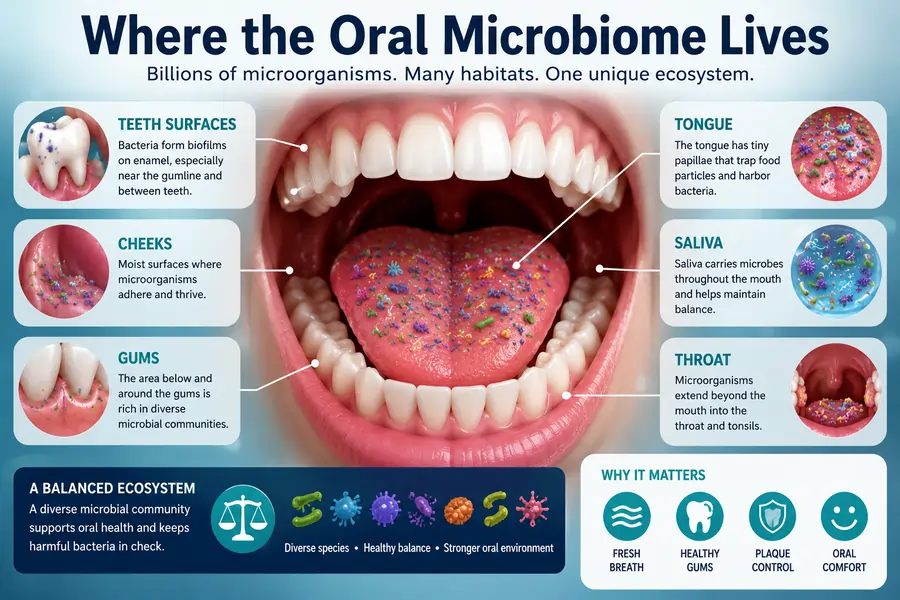
They can be found on:
- The tongue
- The gums
- The teeth
- The cheeks
- The roof of the mouth
- Saliva
- The throat
Each area creates its own unique environment.
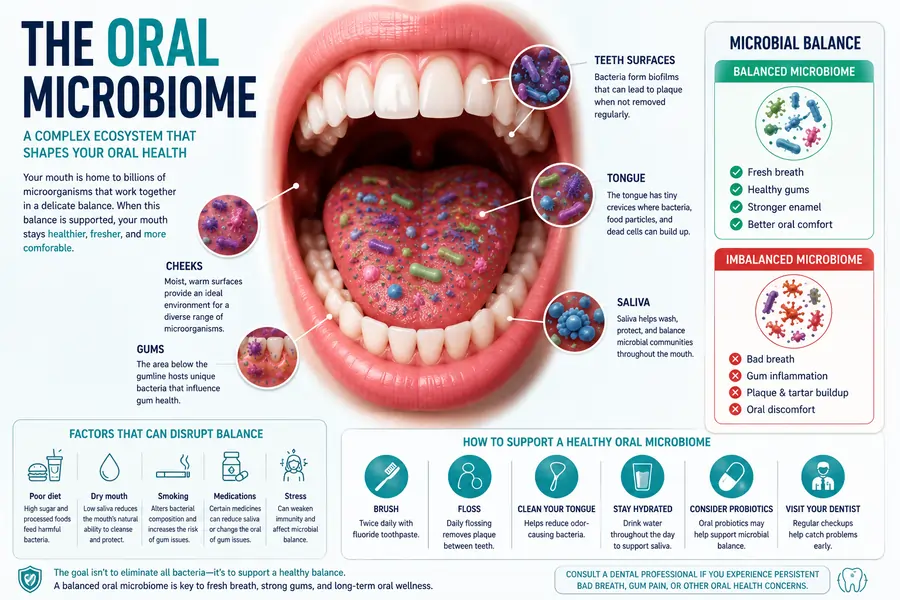
The tongue, for example, contains tiny crevices where different bacterial communities may thrive compared to the smoother surfaces of teeth.
Likewise, the area below the gumline creates a different habitat than saliva or the roof of the mouth.
Rather than existing as isolated organisms, these microbes interact continuously.
Some compete for resources. Others coexist. Some produce compounds that influence neighboring microorganisms.
In many ways, the mouth functions more like a living ecosystem than a simple collection of body parts.
A Different Way To Think About It
Imagine a garden.
If one type of plant completely takes over, the garden often becomes unhealthy. A healthy garden contains variety, balance, and interaction between many different species.
The oral microbiome works in a similar way.
Why Does the Oral Microbiome Matter?
For decades, oral health advice focused primarily on removing bacteria.
While reducing harmful bacterial buildup remains important, modern oral health discussions increasingly recognize that not all bacteria are harmful.
Some microbial communities may contribute to maintaining a healthier oral environment.
This shift has changed how researchers think about several common oral health topics.
Breath Freshness
Certain bacterial activities can influence odor-producing compounds associated with bad breath.
Gum Health
Changes in microbial populations may affect gum comfort and inflammation responses.
Plaque Formation
Microbial interactions play a role in how plaque develops and accumulates over time.
Oral Comfort
The overall oral environment can influence how the mouth feels throughout the day.
Understanding the microbiome helps explain why two people can follow similar brushing routines yet experience very different oral health outcomes.
The condition of the oral environment often depends on more than brushing frequency alone.
What Does a Balanced Oral Microbiome Look Like?
Balance is one of the most important concepts in modern microbiome discussions.
When people first learn about oral bacteria, they often assume the goal is to eliminate as many bacteria as possible.
However, complete elimination is neither realistic nor desirable.
The goal is balance.
| Balanced Oral Environment | Potentially Imbalanced Oral Environment |
|---|---|
| Fresh breath more consistently | Frequent odor concerns |
| Comfortable oral tissues | Recurring irritation |
| Healthy saliva interactions | Persistent dry mouth challenges |
| Stable microbial diversity | Overgrowth of certain bacterial groups |
The Biggest Misunderstanding
The objective of oral health is not to create a sterile mouth.
The objective is to support an environment where microbial communities remain balanced and less likely to contribute to problems.
This distinction becomes especially important when discussing mouthwash, oral probiotics, and long-term oral health strategies.
Why Is the Oral Microbiome Receiving So Much Attention?
Part of the reason is that researchers now have better tools for studying microbial communities than they had decades ago.
Instead of examining only a few bacterial species, scientists can now evaluate much broader microbial ecosystems.
This has led to growing interest in:
- Oral bacteria
- Microbial diversity
- Breath-related compounds
- Oral probiotics
- Microbiome support strategies
Research Note
Modern oral health discussions increasingly focus on microbial balance rather than simply removing all bacteria. This does not mean bacteria are always beneficial or harmful. Context and balance matter.
That shift in perspective helps explain why oral probiotics have become one of the fastest-growing topics in the oral wellness space.
Instead of asking, “How do I kill more bacteria?” many consumers are now asking, “How do I support a healthier oral environment?”
That question naturally leads into discussions about bad breath, mouthwash, oral probiotics, and long-term oral health habits.
How Does the Oral Microbiome Affect Bad Breath?
One of the most discussed connections in oral microbiome research is the relationship between bacteria and breath odor.
Bad breath, also known as halitosis, is often viewed as a hygiene issue. While hygiene certainly plays a role, the reality is usually more complex.
The smell associated with bad breath is frequently linked to compounds produced when certain bacteria break down proteins and other organic materials inside the mouth.
These bacteria are especially common on:
- The tongue
- Between teeth
- Near the gumline
- Areas where food particles accumulate
This helps explain why some people continue to experience bad breath despite brushing twice per day.
The toothbrush cleans tooth surfaces, but odor-producing bacteria may still exist elsewhere in the oral environment.
The Freshness Problem
Many people spend years trying to mask bad breath with stronger mouthwash, mints, gum, and breath sprays.
The problem is that freshness and odor control are not always the same thing.
A mint flavor may temporarily create the feeling of freshness without addressing the source of the odor.
This is one reason we published our guide on bad breath after brushing, which explores the many factors that can contribute to persistent odor.
Why Some People Struggle More Than Others
Two people can follow nearly identical oral hygiene routines and still experience different results.
One person may enjoy consistently fresh breath while another notices odor returning quickly after meals.
The difference often comes down to variables such as:
- Tongue coating
- Saliva production
- Diet
- Gum health
- Oral microbiome composition
- Dry mouth tendencies
These factors interact continuously throughout the day.
That is why oral health rarely comes down to a single cause or a single solution.
Interesting Observation
People often focus heavily on their teeth while overlooking their tongue. Yet for many individuals, the tongue may contribute more to breath odor than the teeth themselves.
Can the Oral Microbiome Affect Gum Health?
Researchers continue studying how microbial communities interact with gum tissues and influence the overall oral environment.
Healthy gums are not determined solely by brushing frequency.
Factors such as plaque accumulation, bacterial interactions, oral hygiene habits, smoking, saliva production, and individual health differences can all influence gum health.
When microbial balance shifts, the environment around the gums may also change.
This is one reason gum health discussions increasingly include references to bacterial communities rather than focusing only on plaque removal.
Healthy Gums
Comfortable tissues, minimal irritation, and consistent oral hygiene habits.
Challenged Gums
Persistent irritation, plaque accumulation, bleeding, or other symptoms that warrant professional evaluation.
Importantly, any concerns involving bleeding gums, swelling, pain, or persistent symptoms should be evaluated by a qualified dental professional.
Can Mouthwash Affect the Oral Microbiome?
Mouthwash is one of the most commonly used oral care products, yet surprisingly few people think about how it influences the broader oral environment.
Many mouthwashes are designed to reduce bacteria and freshen breath.
For some people, they can be a useful addition to an oral hygiene routine.
However, modern discussions about the oral microbiome have created new questions.
Instead of asking only:
“Does this kill bacteria?”
people are increasingly asking:
“How does this influence microbial balance?”
The answer depends on the product, its ingredients, how often it is used, and the individual using it.
A Common Mistake
Many people assume stronger mouthwash automatically equals better oral health.
In reality, oral health is influenced by many factors including brushing, flossing, saliva, hydration, tongue cleaning, diet, and professional dental care.
This broader perspective is one reason interest in oral probiotics has grown so rapidly.
Why Are Oral Probiotics Becoming So Popular?
Oral probiotics have emerged as one of the most discussed topics in oral wellness because they focus on supporting microbial balance rather than simply eliminating bacteria.
The idea is straightforward.
If the mouth contains a complex ecosystem of microorganisms, perhaps supporting a healthier balance may be beneficial.
This concept has attracted attention from:
- People concerned about bad breath
- Consumers interested in oral wellness
- Individuals exploring alternatives to constant mouthwash use
- People curious about microbiome-related health topics
It is important to understand that oral probiotics are not replacements for:
- Brushing
- Flossing
- Professional dental care
- Regular oral hygiene habits
Instead, they are generally positioned as a complementary approach.
Interested in Oral Probiotics?
Our in-depth review explores one of the most talked-about oral probiotic supplements currently available.
If you’re completely new to the topic, understanding the oral microbiome first makes it much easier to evaluate oral probiotic products later.
How Can You Support a Healthy Oral Microbiome?
The goal is not to sterilize the mouth. The goal is to support a healthy oral environment.
Most experts would agree that a healthy oral routine involves multiple habits working together.
Brush Consistently
Regular brushing helps remove plaque and food debris from tooth surfaces.
Floss Daily
Flossing reaches areas that brushing alone cannot fully clean.
Clean the Tongue
Tongue cleaning may help reduce bacterial buildup associated with breath odor.
Stay Hydrated
Healthy saliva production plays an important role in oral comfort and cleanliness.
Visit Your Dentist
Professional evaluations help identify issues that are difficult to detect at home.
Review Your Entire Routine
Look beyond toothpaste alone and consider your overall oral environment.
The Future of Oral Health May Be About Balance
For many years, oral health conversations focused primarily on removing bacteria.
Today, researchers increasingly recognize that the oral environment is more complex than that.
The mouth contains a diverse ecosystem of microorganisms that interact constantly.
Understanding those interactions helps explain why topics such as:
- Bad breath
- Dry mouth
- Tongue coating
- Oral probiotics
- Microbial balance
have become such important areas of discussion.
Bottom Line
The oral microbiome is the living ecosystem inside your mouth.
Rather than focusing solely on eliminating bacteria, modern oral wellness discussions increasingly focus on supporting balance, diversity, and a healthier overall oral environment.
Understanding that concept can completely change how you think about fresh breath, oral hygiene, and long-term oral health.
Frequently Asked Questions
What is the oral microbiome?
The oral microbiome is the community of microorganisms that naturally live inside the mouth, including bacteria, fungi, viruses, and other microbes.
Why is the oral microbiome important?
It influences many aspects of oral health including breath freshness, plaque formation, gum comfort, and the overall oral environment.
Can the oral microbiome cause bad breath?
Certain bacterial activities within the oral microbiome may contribute to odor-producing compounds associated with bad breath.
Do oral probiotics change the oral microbiome?
Oral probiotics are designed to interact with the oral environment, although individual experiences and outcomes may vary.
Should I stop using mouthwash?
Not necessarily. Mouthwash can be a useful part of an oral hygiene routine. The best approach depends on your individual needs and oral health goals.
Is the goal to eliminate all oral bacteria?
No. Modern microbiome discussions generally focus on balance rather than complete elimination of bacteria.
Can I improve my oral microbiome naturally?
Consistent oral hygiene, hydration, tongue cleaning, flossing, and professional dental care all contribute to a healthier oral environment.
Medical Disclaimer:
This content is intended for informational and educational purposes only. It does not diagnose, treat, cure, or prevent any disease. Always consult a qualified healthcare professional regarding medical or dental concerns.
