
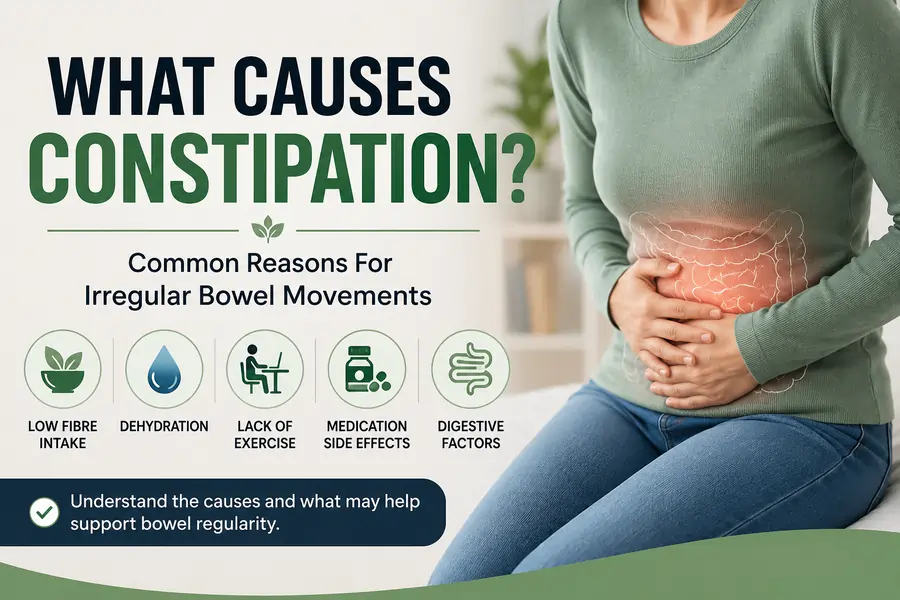
Constipation is most commonly caused by low fibre intake, dehydration, lack of physical activity, changes in routine, certain medications or digestive factors that slow the movement of stool through the intestines.
Occasional constipation is common. However, persistent constipation may indicate that your digestive system, diet or bowel habits need attention.
The most common causes of constipation include not eating enough fibre, inadequate fluid intake, inactivity, delaying bowel movements, medication side effects and digestive disorders. Many cases improve with dietary and lifestyle changes.
Key Takeaways
- Constipation occurs when stool moves too slowly through the digestive tract.
- Low fibre intake is one of the most common causes of constipation.
- Dehydration can make stools harder and more difficult to pass.
- Lack of movement can slow bowel function.
- Certain medications may contribute to constipation.
- Persistent constipation should not be ignored.
In This Guide
- What is constipation?
- Key constipation terms
- What causes constipation most often?
- Problem, cause and possible fixes
- Can low fibre cause constipation?
- Can dehydration cause constipation?
- Can the gut microbiome affect constipation?
- Constipation vs bloating
- When is constipation not normal?
- Frequently asked questions
What Is Constipation?
Constipation occurs when bowel movements become infrequent, difficult to pass or incomplete.
Many people think constipation only means not going to the bathroom for several days.
That is not always true.
A person may have daily bowel movements and still experience constipation if stools are hard, difficult to pass or leave a feeling of incomplete emptying.
Constipation is a symptom rather than a disease. Understanding the cause is usually the first step toward finding the most effective solution.
Key Constipation Terms Explained
| Term | Meaning |
|---|---|
| Constipation | Infrequent, difficult or incomplete bowel movements. |
| Bowel movement | The process of passing stool. |
| Fibre | A plant-based carbohydrate that supports digestive function. |
| Gut microbiome | The community of microorganisms living in the digestive tract. |
| Bowel regularity | Consistent and comfortable bowel movements. |
| Dehydration | Insufficient fluid levels within the body. |
What Causes Constipation Most Often?
The most common causes of constipation are low fibre intake, dehydration, lack of exercise, routine changes, medication use and digestive factors that slow bowel movement.
| Cause | How It May Lead To Constipation |
|---|---|
| Low fibre intake | Reduces stool bulk and slows bowel movement. |
| Dehydration | Can make stools harder and more difficult to pass. |
| Physical inactivity | May reduce digestive movement. |
| Ignoring bowel urges | Can lead to stool remaining in the colon longer. |
| Routine changes | Travel, stress and schedule changes can affect bowel habits. |
| Medications | Some medicines slow digestive movement. |
| Digestive disorders | Certain medical conditions may contribute to constipation. |
Problem, Cause And Possible Fixes For Constipation
| Problem | Possible Cause | Possible Fix |
|---|---|---|
| Hard stools | Low fluid intake | Increase hydration throughout the day. |
| Infrequent bowel movements | Low fibre intake | Add fibre gradually through food sources. |
| Constipation during travel | Routine disruption | Maintain hydration and regular meal times. |
| Constipation after medication changes | Medication side effects | Discuss options with a healthcare professional. |
| Constipation with bloating | Slow bowel movement | Support bowel regularity and hydration. |
Can Low Fibre Cause Constipation?
Yes. Low fibre intake is one of the leading causes of constipation.
Fibre helps add bulk to stool and supports normal bowel movement.
Many modern diets contain less fibre than recommended because they rely heavily on processed foods.
Foods that naturally provide fibre include:
- Vegetables
- Fruit
- Beans
- Lentils
- Whole grains
- Nuts and seeds
Increasing fibre too quickly can sometimes cause temporary gas or bloating, so gradual increases are often easier to tolerate.
Can Dehydration Cause Constipation?
Yes. Dehydration can contribute to constipation because the colon absorbs water from stool.
When the body does not have enough fluid available, stools may become harder and more difficult to pass.
This can lead to:
- Hard stools
- Straining
- Infrequent bowel movements
- Abdominal discomfort
Hydration alone will not solve every case of constipation, but it is an important part of digestive health.
Does Lack Of Exercise Cause Constipation?
Physical activity supports digestive movement and may help maintain regular bowel habits.
People who are inactive for long periods sometimes notice changes in bowel regularity.
Movement appears to help stimulate normal digestive activity.
This is one reason regular exercise is commonly recommended as part of a constipation management strategy.
Can The Gut Microbiome Affect Constipation?
The gut microbiome may influence bowel regularity because gut bacteria interact with digestion, fermentation and stool formation.
The gut microbiome contains trillions of microorganisms that interact with food components and digestive processes.
Researchers continue to study how microbial activity may influence constipation and bowel function.
Although the gut microbiome is only one factor, it is increasingly discussed as part of digestive health.
Constipation vs Bloating: What Is The Difference?
| Constipation | Bloating |
|---|---|
| Difficulty passing stool. | Feeling of abdominal fullness or pressure. |
| May involve hard stools. | May involve excess gas. |
| Often improves after bowel movement. | May improve after passing gas. |
| Commonly linked to fibre and hydration. | Commonly linked to gas production and digestion. |
Although they are different symptoms, they frequently occur together.
In fact, constipation is one of the most common causes of bloating.
When Is Constipation Usually Harmless?
Constipation is often temporary when it is linked to travel, dietary changes, reduced activity or short-term routine disruptions.
| Situation | Likely Explanation |
|---|---|
| During travel | Routine and dietary changes. |
| After reduced activity | Less digestive movement. |
| After dietary changes | Temporary digestive adaptation. |
| During stressful periods | Stress may influence bowel habits. |
What Most People Get Wrong About Constipation
Many people think constipation simply means not going to the bathroom often enough.
In reality, constipation can involve:
- Hard stools
- Straining
- Incomplete emptying
- Discomfort during bowel movements
- Reduced bowel frequency
Another common misconception is that laxatives are always the answer.
For many people, fibre intake, hydration, activity levels and routine play a significant role.
When Is Constipation Not Normal?
Persistent, severe or worsening constipation should be assessed by a healthcare professional.
| Situation | Recommended Action |
|---|---|
| Blood in stool | Seek medical advice. |
| Unexplained weight loss | Seek medical advice. |
| Severe abdominal pain | Seek medical advice. |
| Sudden persistent constipation | Medical assessment recommended. |
| Symptoms that worsen over time | Medical assessment recommended. |
Important: Persistent constipation should not be self-managed indefinitely. Seek professional advice if symptoms continue or worsen.
What May Help Improve Constipation?
| Strategy | Why It May Help |
|---|---|
| Increase fibre intake | Supports stool bulk. |
| Improve hydration | Helps keep stools softer. |
| Stay physically active | Supports digestive movement. |
| Respond to bowel urges | Helps maintain normal bowel habits. |
| Maintain routine | Supports consistency. |
The most effective strategy depends on the underlying cause.
Can Gut Health Supplements Help With Constipation?
Some gut health supplements are formulated to support bowel regularity through ingredients such as fibre, probiotics and digestive-support compounds.
The effectiveness of a supplement depends on the reason constipation is occurring.
For example, a fibre-based supplement may be more appropriate for low fibre intake than for constipation caused by medication side effects.
Next step: Learn more about gut health supplements and how different ingredients may support digestive health.
Fast Facts About Constipation
- Constipation is a symptom, not a disease.
- Low fibre intake is one of the most common causes.
- Dehydration may contribute to harder stools.
- Constipation is a common cause of bloating.
- Persistent constipation deserves proper assessment.
Frequently Asked Questions
What is the most common cause of constipation?
Low fibre intake is one of the most common causes of constipation, often combined with inadequate hydration.
Can stress cause constipation?
Stress can influence digestive function and may affect bowel habits in some people.
Can dehydration cause constipation?
Yes. Dehydration may contribute to harder stools that are more difficult to pass.
Can constipation cause bloating?
Yes. Constipation is one of the most common causes of bloating because stool remains in the bowel longer.
How often should you have a bowel movement?
Normal bowel frequency varies. Consistency and comfort are often more important than a specific number.
Final Answer: What Causes Constipation?
Constipation is most commonly caused by low fibre intake, dehydration, inactivity, routine changes, medication use and digestive factors that slow the movement of stool through the intestines.
Occasional constipation is common.
Persistent constipation deserves attention.
Understanding the cause is often the most important step toward improving bowel regularity and digestive comfort.
Continue reading: Learn more about what causes bloating and how constipation and bloating are often connected.
