
Bloating is a digestive symptom that causes abdominal pressure, fullness, tightness or visible swelling, usually because of excess gas, constipation, food intolerances, eating habits or digestive changes that affect how food moves through the gut.
Occasional bloating is common. Frequent, painful or persistent bloating may indicate that your digestion, bowel habits or gut health need closer attention.
The most common causes of bloating include swallowed air, excess gas production, constipation, fermentable foods, food intolerances, gut microbiome changes and digestive disorders. In many cases, bloating is temporary, but persistent bloating should not be ignored.
Key Takeaways
- Bloating is a symptom, not a disease.
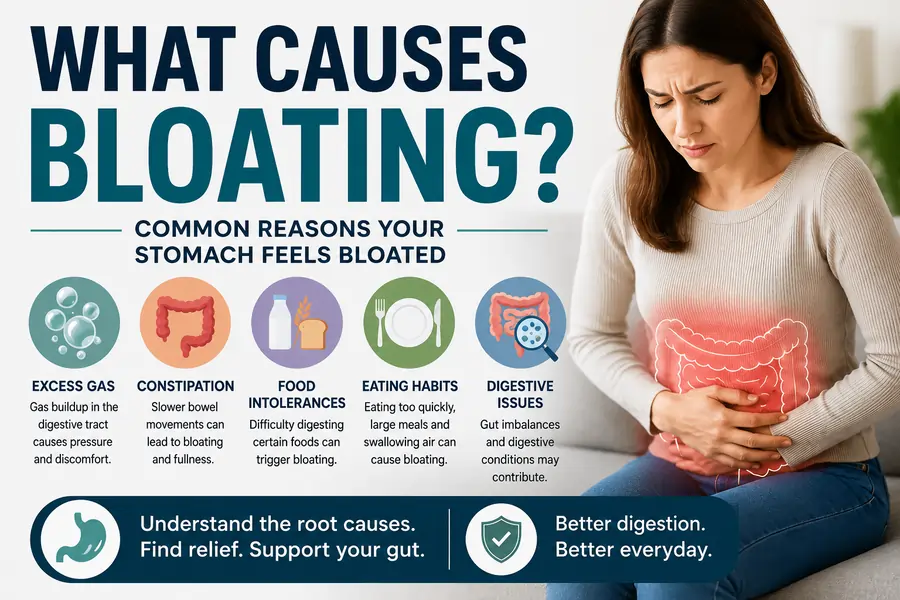
- The most common causes of bloating are excess gas, constipation, food intolerances, eating habits and digestive changes.
- Constipation is one of the most overlooked causes of bloating.
- Fermentable fibres in healthy foods can increase gas production in some people.
- The gut microbiome influences bloating because gut bacteria ferment carbohydrates and produce gas during digestion.
- Persistent bloating should be investigated if it occurs with pain, bleeding, weight loss or ongoing bowel changes.
In This Guide
- What bloating actually is
- The most common causes of bloating
- How gas and constipation create bloating
- Why some foods cause bloating
- How the gut microbiome affects bloating
- When bloating is usually harmless
- When bloating may need medical attention
- What may help reduce bloating
- Frequently asked questions
What Is Bloating?
Bloating is a digestive symptom that causes abdominal fullness, pressure, tightness or visible swelling. It often happens when gas, stool, fluid or digestive sensitivity creates pressure inside the abdomen.
Some people experience bloating as tightness around the stomach area. Others notice visible abdominal expansion, heaviness or discomfort after eating.
Bloating is not a disease.
It is a symptom.
The challenge is that many different causes can produce the same feeling. That is why identifying the likely cause is more useful than treating bloating as one single problem.
Key Bloating Terms Explained
Understanding the main terms makes bloating easier to interpret. Many people use words like bloating, gas and distension interchangeably, but they are not always the same thing.
| Term | Plain-English Meaning |
|---|---|
| Bloating | A feeling of abdominal fullness, pressure or tightness. |
| Abdominal distension | Visible swelling or expansion of the abdomen. |
| Gas | Air produced or swallowed during digestion. |
| Constipation | Infrequent, difficult or incomplete bowel movements. |
| Food intolerance | Difficulty digesting or tolerating a specific food. |
| Gut microbiome | The community of microorganisms living in the digestive tract. |
What Causes Bloating Most Often?
The most common causes of bloating are excess gas, constipation, eating too quickly, food intolerances, fermentable foods and digestive changes within the gut.
| Cause | How It Contributes To Bloating |
|---|---|
| Excess gas | Gas accumulates in the digestive tract and creates pressure. |
| Constipation | Stool remains in the bowel longer, increasing fullness, pressure and discomfort. |
| Eating too quickly | More air is swallowed during meals. |
| Food intolerances | Certain foods are poorly tolerated and may trigger bloating. |
| Fermentable foods | Some fibres and carbohydrates produce more gas during digestion. |
| Gut microbiome changes | Fermentation patterns may influence gas production and digestive comfort. |
| Digestive disorders | Some medical conditions include bloating as a symptom. |
Several of these causes can happen at the same time.
For example, someone who eats quickly, drinks carbonated drinks, consumes very little fibre and experiences constipation may have several reasons for feeling bloated.
Problem, Cause And Possible Fixes For Bloating
The best way to reduce bloating is to match the action to the likely cause. A bloated stomach after dairy needs a different approach than bloating linked to constipation.
| Problem | Possible Cause | Possible Fix |
|---|---|---|
| Bloating after meals | Eating too quickly or swallowing air | Eat slowly and chew food properly. |
| Bloating with constipation | Slow bowel movement | Increase fibre gradually, hydrate and support bowel regularity. |
| Bloating after dairy | Possible lactose intolerance | Track symptoms and consider reducing lactose-containing foods. |
| Bloating after beans or lentils | Fermentable fibre | Reduce portion size and increase gradually. |
| Bloating after fizzy drinks | Carbonation | Reduce carbonated beverages. |
| Bloating with pain or bowel changes | Possible digestive condition | Seek professional medical advice. |
How Does Excess Gas Cause Bloating?
Excess gas causes bloating when gas builds up in the digestive tract faster than the body can comfortably move or release it.
During digestion, gut bacteria break down certain carbohydrates and fibres. This process naturally produces gas.
Most gas passes through the digestive system without major discomfort. Problems develop when gas accumulates, moves slowly or causes pressure inside the abdomen.
This may lead to:
- Abdominal pressure
- Tightness
- Visible swelling
- Burping
- Flatulence
Some people are also more sensitive to normal amounts of gas. In these cases, even typical gas production may feel uncomfortable.
Can Constipation Cause Bloating?
Yes. Constipation can cause bloating because stool remains in the bowel longer, increasing abdominal pressure, fullness and gas buildup.
When stool moves slowly through the digestive tract, it remains in the colon for longer periods. This can make the abdomen feel full, tight or swollen.
This can contribute to:
- Increased pressure
- Abdominal fullness
- Gas accumulation
- Visible abdominal distension
- Discomfort that improves after a bowel movement
Many people focus on gas when trying to understand bloating. Constipation is often the hidden contributor.
Signs constipation may be contributing to bloating:
- Infrequent bowel movements
- Hard stools
- Straining
- A feeling of incomplete emptying
- Abdominal pressure that improves after a bowel movement
Bloating vs Constipation: What Is The Difference?
Bloating is the feeling of abdominal fullness or pressure, while constipation is difficulty passing stool or having infrequent bowel movements. They often occur together, but they are not the same symptom.
| Bloating | Constipation |
|---|---|
| Usually feels like pressure, tightness or swelling. | Usually involves hard, infrequent or difficult bowel movements. |
| Can happen after meals. | Often develops over several days. |
| May improve after passing gas. | May improve after a bowel movement. |
| May be linked to gas, food intolerance or fermentation. | May be linked to low fibre, dehydration, routine changes or medication. |
Why Do Certain Foods Cause Bloating?
Some foods cause bloating because they contain fibres or carbohydrates that gut bacteria ferment, producing gas during digestion.
This does not mean those foods are unhealthy.
In many cases, nutritious foods are responsible for bloating because they contain fermentable fibres.
Common examples include:
- Beans
- Lentils
- Onions
- Garlic
- Broccoli
- Cabbage
- Whole grains
- High-fibre products
For many people, this is normal. For others, it may lead to noticeable bloating, especially when these foods are added suddenly or eaten in large amounts.
Can Food Intolerances Cause Bloating?
Yes. Food intolerances can cause bloating when the digestive system has difficulty processing specific foods or carbohydrates.
Unlike food allergies, food intolerances generally do not involve the immune system in the same way. They often involve difficulty digesting or absorbing certain food components.
Examples may include:
- Lactose intolerance
- Fructose intolerance
- Sensitivity to certain fermentable carbohydrates
People with food intolerances often notice that symptoms appear repeatedly after eating the same food or food group.
A food diary can help identify patterns, especially when bloating occurs after specific meals.
How Does The Gut Microbiome Affect Bloating?
The gut microbiome affects bloating because gut bacteria ferment fibres and carbohydrates, producing gas as a normal part of digestion.
The gut microbiome contains trillions of microorganisms that interact with food components, especially fibres and resistant starches.
As microbes ferment these substances, gas is produced.
This is normal.
However, changes in microbial activity, dietary patterns, bowel speed or digestive sensitivity may influence how much gas is produced and how uncomfortable it feels.
This is one reason gut health discussions often include bloating as a common symptom.
When Is Bloating Usually Harmless?
Bloating is usually harmless when it is occasional, mild and linked to a clear trigger such as a large meal, carbonated drink or sudden fibre increase.
| Situation | Likely Meaning |
|---|---|
| Bloating after a large meal | Usually related to meal size and stomach stretching. |
| Bloating after beans or lentils | Often related to fermentable fibre. |
| Bloating after fizzy drinks | Often related to swallowed gas or carbonation. |
| Bloating after eating quickly | Often related to swallowed air. |
| Bloating after increasing fibre | Often related to digestive adaptation. |
What Most People Get Wrong About Bloating
Many people assume bloating always means poor digestion or poor gut health. That assumption is too simple.
Bloating can occur even in people with otherwise healthy digestive systems.
Examples include:
- Eating very large meals
- Eating too quickly
- Drinking carbonated beverages
- Suddenly increasing fibre intake
- Eating more beans, lentils or cruciferous vegetables than usual
- Hormonal fluctuations
The presence of bloating alone does not automatically indicate a serious digestive problem.
Frequency, severity, triggers and accompanying symptoms matter more.
When Is Bloating Not Normal?
Bloating is not normal when it is persistent, severe, worsening or accompanied by concerning symptoms.
| Situation | Recommended Action |
|---|---|
| Bloating with unexplained weight loss | Seek medical advice. |
| Bloating with blood in stool | Seek medical advice. |
| Bloating with persistent diarrhoea | Seek medical advice. |
| Bloating with severe abdominal pain | Seek medical advice. |
| Bloating with ongoing constipation | Discuss with a healthcare professional. |
| Bloating that worsens over time | Medical assessment is recommended. |
Important: Persistent digestive symptoms should be assessed by a qualified healthcare professional. Self-diagnosis has limitations.
What May Help Reduce Bloating?
The best way to reduce bloating depends on the cause, but slow eating, gradual fibre increases, hydration, bowel regularity and trigger tracking can help many people.
| Strategy | Why It May Help |
|---|---|
| Eat more slowly | Reduces swallowed air. |
| Increase fibre gradually | Allows digestive adaptation. |
| Stay hydrated | Supports bowel function. |
| Address constipation | Reduces abdominal pressure. |
| Track trigger foods | Identifies symptom patterns. |
| Stay physically active | Supports digestive movement. |
| Reduce carbonated drinks | May reduce swallowed gas. |
One of the most effective approaches is identifying patterns rather than eliminating large numbers of foods unnecessarily.
Can Gut Health Supplements Help With Bloating?
Some gut health supplements may help with bloating when they match the underlying cause, such as constipation, low fibre intake, digestive enzyme needs or gut microbiome support.
Their usefulness depends on why bloating is happening.
A supplement that supports bowel regularity may help someone whose bloating is linked to constipation.
A different approach may be needed when bloating is related to food intolerances, eating habits or carbonated drinks.
Situation-based guide:
| If Bloating Is Linked To | What May Matter Most |
|---|---|
| Constipation | Bowel regularity, fibre, hydration and movement. |
| Food intolerance | Trigger identification and dietary adjustment. |
| Low fibre intake | Gradual fibre increase. |
| Fermentable foods | Portion size and slow adaptation. |
| Gut microbiome support | Diet quality, prebiotics, probiotics and consistency. |
Next step: Learn more about gut health supplements and the ingredients commonly used to support digestive health.
Fast Facts About Bloating
- Bloating is a symptom, not a diagnosis.
- Excess gas and constipation are two of the most common causes.
- Healthy high-fibre foods can cause temporary bloating.
- The gut microbiome can influence gas production through fermentation.
- Persistent or painful bloating should be assessed properly.
Frequently Asked Questions
What is the most common cause of bloating?
Excess gas and constipation are among the most common causes of bloating. Eating too quickly, food intolerances and fermentable foods can also contribute.
Can stress cause bloating?
Yes. Stress can influence digestion and may contribute to bloating in some individuals.
Why do healthy foods sometimes cause bloating?
Many healthy foods contain fermentable fibres that gut bacteria break down during digestion. This fermentation process can produce gas and cause temporary bloating.
Can dehydration cause bloating?
Dehydration can contribute to constipation, which may increase bloating and abdominal pressure.
Does bloating mean I have poor gut health?
No. Occasional bloating does not automatically mean poor gut health. Bloating can happen after large meals, fizzy drinks, high-fibre foods or temporary digestive changes.
When should I worry about bloating?
You should seek medical advice if bloating is persistent, severe or accompanied by concerning symptoms such as unexplained weight loss, blood in stool, ongoing diarrhoea or significant pain.
Final Answer: What Causes Bloating?
Bloating is most commonly caused by excess gas, constipation, food intolerances, eating habits, fermentable foods and digestive changes that affect how food moves through the gut.
Occasional bloating is normal.
Persistent bloating is a signal worth investigating.
Understanding the cause is often the key to finding the most effective solution.
Continue reading: If bloating occurs alongside other digestive symptoms, explore our guide to unhealthy gut signs to better understand what your digestive system may be telling you.
