
Tongue bacteria can cause bad breath because the tongue surface traps bacteria, food debris, dead cells, and saliva proteins that can release unpleasant sulfur-smelling gases. This is why breath can still smell bad even after brushing the teeth.
Most people think bad breath starts with the teeth.
Often, it starts on the tongue.
The tongue has a rough surface with small grooves and papillae. These tiny surface structures can hold bacteria, mucus, food particles, and dead cells. When bacteria break down this material, they can create volatile sulfur compounds, which are one of the main reasons breath can smell stale, sour, or rotten.
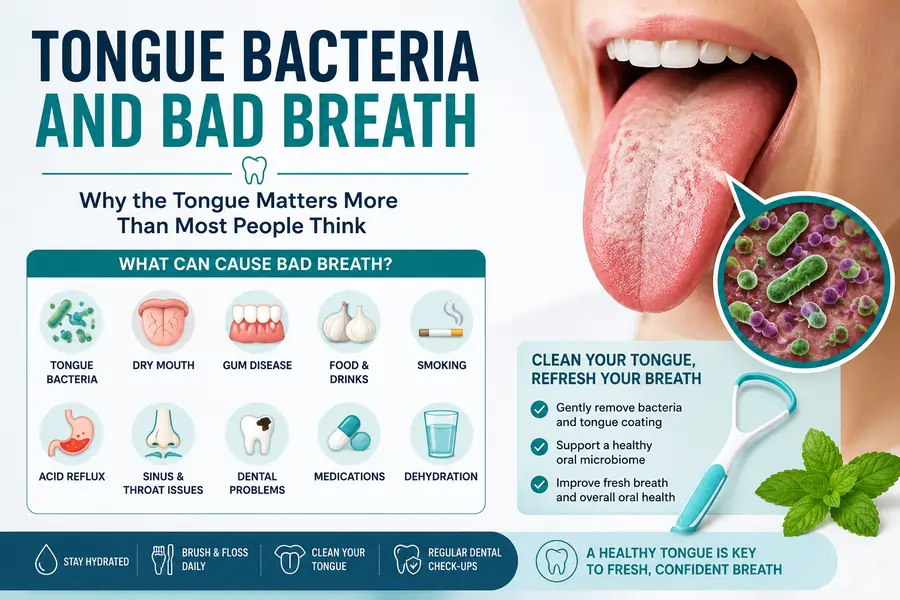
Simple takeaway: Clean teeth can still sit inside an unbalanced mouth. If the tongue, saliva, gums, or throat are involved, brushing alone may not fully fix bad breath.
What Are Tongue Bacteria?
Tongue bacteria are microorganisms that naturally live on the surface of the tongue as part of the oral microbiome.
The tongue is not supposed to be sterile. It sits inside a wet, warm oral environment that contains saliva, food particles, enzymes, proteins, and bacteria. This makes it an active part of the oral microbiome.
Some tongue bacteria are harmless. Some may support normal oral balance. Others can contribute to unpleasant breath when they become more active or when the tongue surface collects too much coating.
The tongue can collect several odor sources
These substances can sit on the tongue surface and give bacteria more material to break down.
- Food particles.
- Dead cells.
- Saliva proteins.
- Mucus from postnasal drip.
- Dental plaque bacteria.
- Tobacco residue.
- Thick tongue coating.
This is why tongue health matters in bad breath articles, oral probiotic discussions, and wider dental hygiene routines.
Why Can the Tongue Cause Bad Breath?
The tongue can cause bad breath because odor-producing bacteria can sit deep in the tongue coating and release sulfur-smelling gases.
The back of the tongue is often harder to clean than the front. It also sits closer to the throat, where mucus, saliva proteins, and bacteria can collect. This area can become a major source of breath odor.
The smell often comes from volatile sulfur compounds. These compounds are produced when bacteria break down proteins and organic material in the mouth. The result can be a smell similar to rotten eggs, stale breath, or decay.
Direct answer: The tongue causes bad breath when bacteria on its surface break down trapped material and produce odor compounds.
This also explains why some people still notice odor after brushing their teeth. Brushing cleans tooth surfaces, but it may not clean the back of the tongue properly. For a broader explanation, read why breath smells bad even after brushing.
What Are the Signs That Tongue Bacteria May Be Causing Bad Breath?
Signs that tongue bacteria may be causing bad breath include a coated tongue, stale taste, morning breath, dry mouth, and odor that returns soon after brushing.
These signs do not prove the tongue is the only cause. Bad breath can also come from gum disease, cavities, reflux, tonsil stones, sinus problems, smoking, medications, or dry mouth.
Common signs linked with tongue bacteria
These signs may suggest the tongue is part of the breath issue.
- A white, yellow, or thick coating on the tongue.
- A stale or sour taste in the mouth.
- Bad breath that comes back soon after brushing.
- Stronger breath in the morning.
- Dry mouth or sticky saliva.
- Postnasal drip or mucus on the tongue.
- Odor that improves after tongue cleaning.
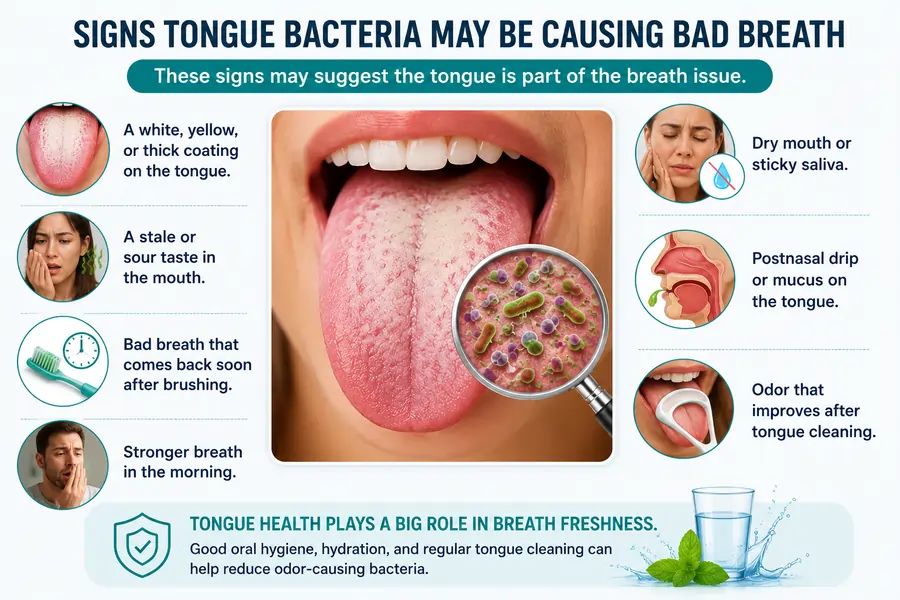
Important: Persistent bad breath should not be dismissed as only a tongue problem. Gum disease, dental infection, reflux, sinus issues, and tonsil stones can also create long-lasting odor.
Does a White Tongue Mean Bad Breath?
A white tongue can contribute to bad breath when the coating contains bacteria, food debris, dead cells, and mucus.
A light coating can be normal, especially in the morning. A thicker white or yellow coating can be more likely to hold odor-producing bacteria.
The color alone does not explain everything. A white tongue may be linked with dry mouth, poor tongue cleaning, smoking, dehydration, mouth breathing, oral thrush, illness, or some medications.
White tongue is not always serious
A mild coating that improves with hydration and gentle cleaning is common. A thick, painful, persistent, or patchy coating should be checked by a dentist or doctor.
If the main problem is ongoing breath odor, it helps to look at the whole oral environment. Our guide on what causes bad breath covers mouth, throat, stomach, and lifestyle causes in more detail.
How Does Dry Mouth Affect Tongue Bacteria?
Dry mouth can make tongue bacteria more active because saliva normally helps rinse the tongue, dilute odor compounds, and move debris away from oral tissues.
Saliva is one of the mouth’s built-in cleaning systems. When saliva flow drops, bacteria and food particles remain on the tongue longer. This can make tongue coating thicker and breath odor stronger.
Dry mouth can happen for several reasons
These triggers can reduce saliva or make the tongue feel dry and coated.
- Mouth breathing during sleep.
- Snoring or blocked nose breathing.
- Dehydration.
- Alcohol.
- Caffeine.
- Smoking or vaping.
- Some medicines.
- Stress or anxiety.
- Salivary gland problems.
Simple answer: A dry tongue gives bacteria more time to sit, break down debris, and release odor compounds.
Hydration, nasal breathing support, sugar-free gum, and dental advice may help depending on the cause. Persistent dry mouth should be checked because it can also increase the risk of tooth decay and gum problems.
How Do Tongue Bacteria Connect With Gum Health?
Tongue bacteria and gum health are connected because the tongue can act as a reservoir for bacteria that also interact with teeth, gums, plaque, and saliva.
The mouth is one connected system. Bacteria do not stay in one fixed place. They can move between the tongue, saliva, teeth, gumline, cheeks, and throat.
This means tongue cleaning may support breath freshness, but it cannot replace gum care. Gum pockets, plaque buildup, and bleeding gums need direct dental attention.
Do not ignore gum symptoms
Bad breath with bleeding gums, swelling, gum recession, loose teeth, or a bad taste from one area should be checked by a dentist.
If you want to understand the wider link between bacteria and oral supplements, read do oral probiotics work?.
How Do You Clean Tongue Bacteria Properly?
You can clean tongue bacteria by gently scraping or brushing the tongue from back to front once daily, without pressing hard or damaging the surface.
Tongue cleaning should feel gentle. The goal is to reduce coating, not scrape the tongue raw. Over-cleaning can irritate the tongue and make the mouth feel sore.
How to clean your tongue safely
These steps can help reduce tongue coating without irritating the surface.
- Use a soft tongue scraper or a soft toothbrush.
- Start near the back of the tongue without triggering gagging.
- Move gently from back to front.
- Rinse the scraper or brush after each pass.
- Use light pressure only.
- Rinse your mouth with water afterwards.
- Stop if the tongue feels painful, raw, or irritated.
Helpful routine: Brush teeth, clean between teeth, clean the tongue gently, drink water, and book dental checks. Breath freshness usually needs more than one step.
Is a Tongue Scraper Better Than a Toothbrush?
A tongue scraper may remove tongue coating more efficiently for some people, while a soft toothbrush can still help if used gently.
The better choice depends on comfort. Some people prefer a scraper because it feels cleaner and reaches the tongue surface evenly. Others prefer a soft toothbrush because it is already part of their routine.
Tongue scraper vs toothbrush
| Option | Best for | Main caution |
|---|---|---|
| Tongue scraper | Removing surface coating in a controlled way | Can irritate the tongue if pressed too hard |
| Soft toothbrush | People who want a simple routine | May not remove coating as evenly for some users |
Can Mouthwash Remove Tongue Bacteria?
Mouthwash may reduce some bacteria and improve breath temporarily, but it does not physically remove tongue coating the way gentle tongue cleaning can.
This matters because odor often sits inside coating or trapped debris. A rinse may freshen the mouth for a short time, but thick tongue coating may still remain.
Alcohol-based mouthwash can also make dry mouth worse for some people. If dry mouth is part of the breath issue, choose mouthwash carefully and ask a dentist for guidance.
Do not use mouthwash to hide symptoms. If bad breath keeps returning, the cause needs to be found rather than masked.
Can Oral Probiotics Help Tongue Bacteria and Bad Breath?
Oral probiotics may help support bacterial balance in the mouth, but they should be used as support, not as a replacement for tongue cleaning, flossing, brushing, hydration, or dental care.
The idea behind oral probiotics is to support a healthier balance of bacteria in the oral environment. This may be relevant when breath odor is linked with oral bacteria, tongue coating, or microbiome imbalance.
However, oral probiotics will not fix every cause of bad breath. They will not treat gum disease, cavities, dental infections, tonsil stones, reflux, or sinus problems.
Best use case: Oral probiotics make the most sense when bad breath is linked with oral bacteria balance and the user already follows a solid oral hygiene routine.
For product-level research, compare our guide to the best oral probiotics. You can also read the individual reviews for ProDentim, GumAktiv, and SynaDentix.
What Else Can Reduce Tongue-Related Bad Breath?
Tongue-related bad breath often improves when tongue cleaning is combined with hydration, flossing, gum care, saliva support, and treatment of dental or throat issues.
Bad breath is rarely fixed by one habit alone. The tongue matters, but so do teeth, gums, saliva, diet, smoking, reflux, and dental visits.
Daily habits that may help
These habits support a cleaner tongue and a healthier oral environment.
- Brush teeth twice daily with fluoride toothpaste.
- Clean between teeth every day.
- Clean the tongue gently once daily.
- Drink enough water.
- Limit smoking and vaping.
- Reduce frequent sugary snacks.
- Clean retainers, aligners, dentures, or mouthguards properly.
- Book regular dental checks and cleans.
Next step: If your breath still smells bad after improving tongue cleaning, read what causes bad breath to check other possible causes.
When Should You See a Dentist?
You should see a dentist if bad breath lasts more than a few weeks, returns quickly after cleaning, or comes with bleeding gums, tooth pain, swelling, loose teeth, or a constant bad taste.
A dentist can check whether the odor is coming from tongue coating, plaque, cavities, gum pockets, dry mouth, dental appliances, or infection. If the mouth is not the main cause, a doctor may need to check reflux, sinus, throat, medication, or medical factors.
Get checked if you notice these symptoms
These signs can point to a dental or medical issue that needs proper assessment.
- Bad breath that does not improve after 2 to 3 weeks.
- Bleeding gums.
- Swollen gums.
- Tooth pain.
- Loose teeth.
- Thick tongue coating that does not improve.
- White patches or mouth sores.
- Dry mouth that keeps returning.
- Bad taste from one area of the mouth.
- Frequent tonsil stones or throat odor.
What Is the Main Link Between Tongue Bacteria and Bad Breath?
The main link is that bacteria on the tongue can break down trapped material and release odor compounds that affect breath.
This makes tongue cleaning an important part of oral hygiene. It also explains why some people need more than toothbrushing to manage breath freshness.
The tongue is only one part of the answer. The best routine also includes gum care, flossing, hydration, saliva support, dental checks, and treatment of any underlying cause.
Tongue Bacteria and Bad Breath FAQs
Can tongue bacteria cause bad breath?
Yes, tongue bacteria can cause bad breath when bacteria break down food debris, dead cells, and saliva proteins on the tongue surface. This can release sulfur-smelling gases that affect breath.
Why does my tongue smell bad?
Your tongue may smell bad because bacteria, mucus, food particles, and dead cells are trapped in the tongue coating. Dry mouth, poor tongue cleaning, smoking, postnasal drip, and dehydration can make this worse.
Does a white tongue cause bad breath?
A white tongue can cause bad breath if the coating contains odor-producing bacteria and trapped debris. A mild coating can be normal, but a thick, painful, or persistent coating should be checked.
Does brushing your tongue help bad breath?
Yes, gentle tongue cleaning can help bad breath if tongue coating is part of the problem. Use light pressure and avoid scraping the tongue so hard that it becomes sore.
Is a tongue scraper good for bad breath?
A tongue scraper may help bad breath by removing surface coating from the tongue. It should be used gently and should not replace brushing, flossing, or dental checks.
Can mouthwash kill tongue bacteria?
Mouthwash may reduce some bacteria temporarily, but it does not remove tongue coating as effectively as gentle physical cleaning. Alcohol-based mouthwash may worsen dry mouth in some people.
Can oral probiotics improve tongue bacteria?
Oral probiotics may support a healthier bacterial balance in the mouth, but they are not a guaranteed fix for tongue-related bad breath. They work best as part of a wider oral care routine.
Why does bad breath come back after brushing?
Bad breath can come back after brushing if bacteria remain on the tongue, between teeth, under the gumline, in tonsil stones, or in a dry mouth environment. Brushing teeth alone may not clean all odor sources.
Can dehydration make tongue bacteria worse?
Yes, dehydration can make tongue bacteria more noticeable because lower saliva flow allows debris and odor compounds to sit in the mouth longer. Drinking water may help if dry mouth is part of the issue.
When should I see a dentist for tongue-related bad breath?
You should see a dentist if bad breath lasts more than a few weeks, or if it comes with bleeding gums, tooth pain, swelling, dry mouth, mouth sores, or thick tongue coating that does not improve.
Final Takeaway
Tongue bacteria can be a major cause of bad breath because the tongue surface traps bacteria, debris, dead cells, and saliva proteins.
Brushing the teeth is important, but it may not clean the tongue properly. For many people, breath freshness improves when brushing is combined with flossing, gentle tongue cleaning, hydration, gum care, and regular dental checks.
If tongue cleaning does not help, the cause may involve dry mouth, gum disease, reflux, tonsil stones, sinus issues, medication, or dental infection.
Reference Sources
This article was reviewed against public guidance from Mayo Clinic, Cleveland Clinic, ADA MouthHealthy, and NHS on bad breath, oral hygiene, tongue coating, dry mouth, gum disease, reflux, and dental warning signs.
