
Bad breath is usually caused by odor-producing bacteria in the mouth, especially on the tongue, gums, teeth, and between teeth. Other common causes include dry mouth, gum disease, food, smoking, reflux, sinus problems, tonsil stones, medications, and poor oral hygiene.
Bad breath is not always a brushing problem.
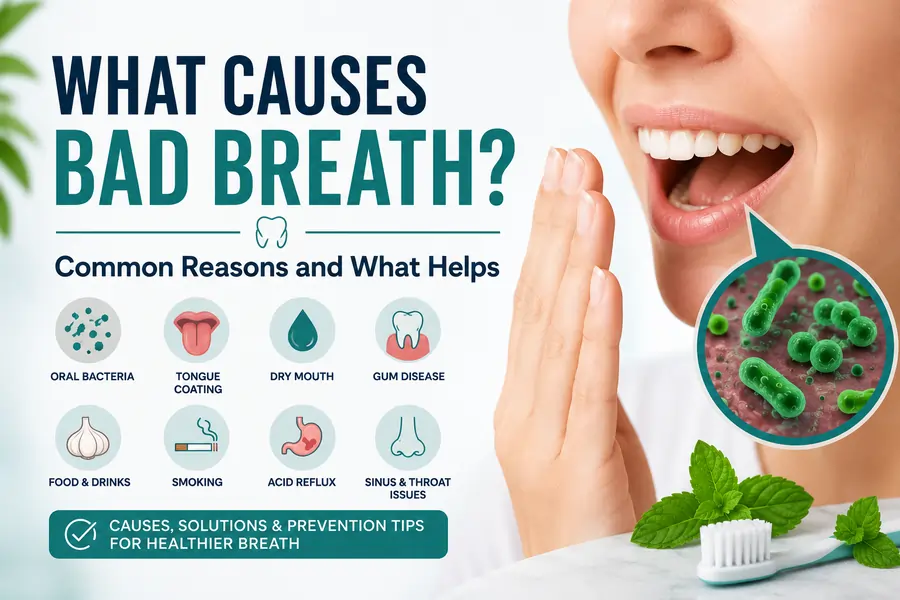
Many people brush their teeth and still notice an unpleasant smell later in the day. That can happen because breath odor often comes from places a toothbrush does not fully clean, such as the tongue coating, gumline, interdental spaces, tonsils, throat, or dry mouth environment.
The mouth contains saliva, bacteria, food particles, proteins, enzymes, plaque, and soft tissues. When bacteria break down food debris and proteins, they can produce sulfur-smelling gases. These gases are one of the main reasons breath can smell stale, sour, metallic, or rotten.
Important: Occasional bad breath after coffee, garlic, onions, fasting, or sleep is common. Ongoing bad breath that does not improve with brushing, flossing, tongue cleaning, and hydration should be checked by a dentist or health professional.
What Is Bad Breath?
Bad breath, also called halitosis, is an unpleasant smell in the breath that can come from the mouth, throat, nose, stomach, or wider health conditions.
Most bad breath starts in the mouth. The tongue, gums, teeth, saliva, and dental plaque all form part of the oral microbiome. This microbiome contains bacteria that can be helpful, neutral, or odor-producing depending on the oral environment.
Bad breath can be temporary or persistent. Temporary bad breath often follows sleep, coffee, garlic, onions, spicy food, alcohol, fasting, or dehydration. Persistent bad breath may point to tongue coating, gum disease, dry mouth, dental infection, reflux, tonsil stones, sinus issues, or medication-related dryness.
Why Does Bad Breath Happen?
Bad breath happens when bacteria break down food particles, dead cells, saliva proteins, and oral debris, producing odor compounds in the process.
The strongest breath odors often come from volatile sulfur compounds. These compounds can smell like rotten eggs, cabbage, or decay. They are commonly linked with bacteria on the tongue, gum pockets, plaque, and areas where oxygen is low.
This is why brushing teeth alone does not always fix the issue. Toothbrushing can clean tooth surfaces, but it may not remove bacteria from the back of the tongue, between teeth, under the gumline, or around tonsil stones.
For a more specific explanation, read our guide on why breath smells bad even after brushing.
How Do Oral Bacteria Cause Bad Breath?
Oral bacteria cause bad breath by breaking down proteins and releasing odor-producing gases.
The mouth is not meant to be sterile. Healthy mouths contain many types of bacteria. The problem starts when odor-producing bacteria become more active or when food debris, plaque, dry mouth, or gum inflammation gives those bacteria more material to break down.
These bacteria often collect in rough surfaces and low-oxygen spaces. The back of the tongue, gum pockets, dental plaque, cavities, poorly cleaned dentures, and spaces between teeth can all hold odor-producing bacteria.
Common bacterial odor areas
These areas often collect bacteria, food particles, and proteins that can affect breath.
- Back of the tongue.
- Between teeth.
- Along the gumline.
- Inside gum pockets.
- Around cavities or broken fillings.
- On dentures, retainers, aligners, or mouthguards.
- Around tonsil stones.
Oral probiotics are sometimes discussed because they aim to support a healthier balance of bacteria in the mouth. Our guide on whether oral probiotics work explains the evidence and limits in more detail.
Can Tongue Coating Cause Bad Breath?
Yes, tongue coating is one of the most common oral causes of bad breath because bacteria can collect on the rough surface of the tongue.
The tongue has grooves and tiny surface structures that can trap bacteria, dead cells, food debris, and saliva proteins. When this coating builds up, bacteria can produce sulfur compounds that make breath smell unpleasant.
This is why someone can brush their teeth well and still have bad breath. The teeth may be clean, but the tongue may still hold odor-producing bacteria.
Signs tongue coating may be involved
These signs may point to tongue coating as part of the breath issue.
- A white, yellow, or thick coating on the tongue.
- Bad breath that returns soon after brushing.
- A stale taste in the mouth.
- Dry mouth in the morning.
- Odor that improves after tongue cleaning.
A soft tongue scraper or gentle tongue brushing can help some people. Avoid harsh scraping because irritated tissue can make the mouth feel worse.
Does Dry Mouth Cause Bad Breath?
Dry mouth can cause bad breath because saliva helps wash away food particles, dilute acids, and control bacteria in the mouth.
Saliva is one of the mouth’s natural cleaning systems. When saliva flow drops, bacteria and food debris remain in the mouth longer. This can make breath smell stronger, especially after sleep, fasting, mouth breathing, alcohol, or dehydration.
Dry mouth can also happen because of medications, snoring, stress, ageing, caffeine, tobacco use, salivary gland problems, or medical conditions.
Common dry mouth triggers
These triggers can reduce saliva or make the mouth feel dry.
- Sleeping with the mouth open.
- Snoring or blocked nose breathing.
- Not drinking enough water.
- Alcohol and caffeine.
- Smoking or vaping.
- Some medicines.
- Fasting or low-carbohydrate dieting.
- Salivary gland problems.
Hydration, sugar-free chewing gum, saliva-friendly oral care, and dental advice can help. Persistent dry mouth should be checked because saliva also helps protect teeth and gums.
Can Gum Disease Cause Bad Breath?
Yes, gum disease can cause persistent bad breath because bacteria can collect below the gumline and inside gum pockets.
Gum disease starts when plaque builds up around the teeth and gums. Early gum irritation is often called gingivitis. More advanced gum disease is called periodontitis. When gum pockets deepen, bacteria and debris can collect in areas that normal brushing cannot clean properly.
Bad breath linked with gum disease may come with bleeding gums, swelling, tenderness, gum recession, loose teeth, or a bad taste that keeps returning.
Do not rely on supplements for gum disease. Bleeding gums, swelling, gum recession, or loose teeth need dental assessment. Oral probiotics and oral health supplements may support routines, but they do not replace periodontal care.
Which Foods and Drinks Cause Bad Breath?
Foods and drinks can cause bad breath by leaving strong-smelling compounds in the mouth, reducing saliva, or affecting the air you exhale.
Garlic and onions are classic examples because their sulfur compounds can enter the bloodstream and be released through the lungs. Coffee can also affect breath because it has a strong smell and may contribute to dry mouth. Alcohol can dry the mouth and may worsen reflux in some people.
Common food and drink triggers
These foods and drinks can make breath smell stronger for some people.
- Garlic.
- Onions.
- Coffee.
- Alcohol.
- Spicy foods.
- High-sugar snacks.
- Strong dairy odors in some people.
- Low-carbohydrate or fasting diets.
Food-related breath is usually temporary. Brushing, flossing, tongue cleaning, water, and time usually help. Persistent odor needs a closer look at oral hygiene, gum health, dry mouth, reflux, and sinus or throat causes.
Can Smoking and Tobacco Cause Bad Breath?
Yes, smoking and tobacco can cause bad breath by leaving odor in the mouth, drying oral tissues, changing saliva, and increasing gum disease risk.
Tobacco odor can stay on the tongue, teeth, gums, and soft tissues. Smoking can also dry the mouth, stain teeth, irritate gums, and increase the risk of periodontal disease.
Vaping may also contribute to dry mouth or mouth irritation in some users. Any tobacco or nicotine product can make breath freshness harder to maintain.
Can Acid Reflux Cause Bad Breath?
Yes, acid reflux can contribute to bad breath when stomach contents or acidic gases move upward into the throat or mouth.
Reflux-related breath may come with heartburn, sour taste, burping, throat clearing, cough, hoarseness, nausea, or a burning feeling after meals. Some people have silent reflux, where throat symptoms are more obvious than heartburn.
Oral hygiene can help the mouth feel cleaner, but reflux-related breath may need dietary changes, medical assessment, or reflux management.
Useful clue: If the breath smells sour or acidic and comes with throat symptoms, reflux may be part of the problem.
Can Sinus Problems, Tonsil Stones, or Throat Issues Cause Bad Breath?
Yes, sinus problems, postnasal drip, tonsil stones, and throat infections can cause bad breath even when the teeth are clean.
Postnasal drip can bring mucus into the throat, where bacteria can break it down and create odor. Tonsil stones can trap bacteria and debris in small pockets of the tonsils. Throat infections can also create unpleasant breath until the infection or inflammation improves.
Signs the nose or throat may be involved
These signs may suggest the odor is not only coming from the teeth.
- Postnasal drip.
- Blocked nose.
- Sinus pressure.
- White or yellow tonsil stones.
- Bad taste from the throat.
- Frequent throat clearing.
- Recurring sore throat.
A dentist can check whether the mouth is the likely source. A doctor may be needed when sinus, throat, reflux, or medical causes are suspected.
Can Medications Cause Bad Breath?
Some medications can contribute to bad breath by causing dry mouth or changing saliva flow.
Dry mouth is a known side effect of many medicine types. These may include some antihistamines, antidepressants, blood pressure medicines, pain medicines, decongestants, and anxiety medicines. The exact risk depends on the medication and the person.
Do not stop medication because of bad breath without speaking with a doctor. A dentist, pharmacist, or doctor may suggest dry mouth strategies that fit your situation.
Can Poor Dental Appliances Cause Bad Breath?
Yes, dentures, aligners, retainers, mouthguards, and dental appliances can cause bad breath if bacteria and food debris build up on them.
Appliances sit close to saliva, gums, teeth, and oral bacteria for long periods. If they are not cleaned properly, they can hold odor-producing bacteria.
Dental appliance cleaning basics
These habits can reduce odor linked with oral appliances.
- Clean the appliance daily.
- Follow dentist or manufacturer instructions.
- Do not sleep in appliances unless advised.
- Store removable appliances properly.
- Replace damaged or heavily stained appliances when needed.
How Can You Improve Bad Breath?
You can improve bad breath by cleaning the teeth, tongue, gumline, and spaces between teeth while also managing dry mouth, diet, smoking, and dental problems.
The best approach depends on the cause. A mint can mask odor for a short time, but it does not remove tongue coating, plaque, gum pockets, reflux, tonsil stones, or dry mouth.
Daily steps that may help
These steps target the most common mouth-based causes of bad breath.
- Brush teeth twice daily with fluoride toothpaste.
- Clean between teeth with floss or interdental brushes.
- Clean the tongue gently, especially the back of the tongue.
- Drink enough water during the day.
- Limit smoking, alcohol, and frequent sugary snacks.
- Clean dentures, aligners, retainers, or mouthguards properly.
- Book regular dental checks and cleans.
- Ask a dentist about dry mouth, gum bleeding, or persistent odor.
Some people also consider oral probiotics as part of a wider routine. For a product-level overview, see our guide to the best oral probiotics. Product-specific reviews are also available for ProDentim, GumAktiv, and SynaDentix.
Can Oral Probiotics Help Bad Breath?
Oral probiotics may help some people with bad breath by supporting oral bacteria balance, but they are not a guaranteed fix and they do not replace dental care.
The idea is simple. If some bad breath comes from odor-producing bacteria, then supporting a healthier oral microbiome may help in some cases. However, bad breath can also come from gum disease, dry mouth, reflux, tonsil stones, sinus problems, smoking, or dental infection.
This means oral probiotics make the most sense when used as one part of a complete oral care routine. They make less sense when bad breath is caused by an untreated dental or medical issue.
Simple answer: Oral probiotics may support breath freshness if bacteria balance is part of the problem, but persistent bad breath needs the cause identified first.
When Should You See a Dentist for Bad Breath?
You should see a dentist if bad breath lasts more than a few weeks despite good oral hygiene, or if it comes with bleeding gums, tooth pain, swelling, loose teeth, or a constant bad taste.
A dentist can check plaque buildup, gum pockets, cavities, broken fillings, tongue coating, dry mouth signs, dental infections, and oral appliances. If the mouth is not the likely source, they may suggest seeing a doctor for reflux, sinus, throat, medication, or medical causes.
Book a dental check if you notice these signs
These signs may point to a dental or medical cause that needs proper assessment.
- Bad breath that does not improve after 2 to 3 weeks of better oral hygiene.
- Bleeding gums.
- Swollen or painful gums.
- Loose teeth.
- Tooth pain.
- Bad taste from one area of the mouth.
- Pus, swelling, or facial pain.
- Dry mouth that keeps returning.
- White patches, ulcers, or mouth sores that do not heal.
What Is the Main Cause of Bad Breath?
The main cause of bad breath is usually bacteria in the mouth, especially bacteria on the tongue, between teeth, and around the gumline.
That does not mean every case is simple. Mouth-based causes are common, but reflux, dry mouth, sinus issues, tonsil stones, smoking, diet, medications, and medical conditions can also contribute.
A good first step is to improve the basics. Clean the tongue, floss daily, stay hydrated, and see a dentist if the smell continues.
Bad Breath FAQs
What causes bad breath even after brushing?
Bad breath after brushing is often caused by tongue bacteria, dry mouth, food trapped between teeth, gum disease, tonsil stones, reflux, or dental infection. Brushing teeth alone may not clean the tongue, gum pockets, or spaces between teeth.
Why does my breath smell bad in the morning?
Morning breath usually happens because saliva flow drops during sleep, allowing bacteria and odor compounds to build up overnight. Mouth breathing, snoring, dehydration, alcohol, and dry mouth can make morning breath stronger.
Can bad breath come from the stomach?
Yes, bad breath can sometimes be linked with reflux or digestive issues, but most bad breath starts in the mouth. Sour breath, burning, burping, throat clearing, or a bitter taste may suggest reflux involvement.
Can gum disease cause bad breath?
Yes, gum disease can cause persistent bad breath because bacteria can collect below the gumline and inside gum pockets. Bleeding gums, swelling, recession, or loose teeth should be checked by a dentist.
Can a coated tongue cause bad breath?
Yes, a coated tongue can cause bad breath because bacteria, food debris, dead cells, and saliva proteins can collect on the tongue surface. Gentle tongue cleaning may help if tongue coating is part of the cause.
Can dry mouth make breath smell worse?
Yes, dry mouth can make breath smell worse because saliva helps wash away food particles and control bacteria. Dry mouth can come from dehydration, mouth breathing, medication, alcohol, smoking, or salivary gland issues.
Do oral probiotics help bad breath?
Oral probiotics may help some people with breath freshness by supporting oral bacteria balance. They are not a replacement for brushing, flossing, tongue cleaning, dental care, or treatment of gum disease.
What foods cause bad breath?
Garlic, onions, coffee, alcohol, spicy foods, high-sugar snacks, and some strong dairy odors can contribute to bad breath. Food-related breath is usually temporary.
Can tonsil stones cause bad breath?
Yes, tonsil stones can cause bad breath because they can trap bacteria and debris in the tonsils. A dentist or doctor can help if tonsil stones are frequent, painful, or hard to manage.
When should I worry about bad breath?
You should get bad breath checked if it lasts more than a few weeks, keeps returning, or comes with bleeding gums, tooth pain, swelling, dry mouth, mouth sores, or a constant bad taste.
Final Takeaway
Bad breath is usually caused by bacteria in the mouth, but the real trigger can be tongue coating, dry mouth, gum disease, food, smoking, reflux, sinus issues, tonsil stones, medication, or dental infection.
The best fix starts with the cause. Brushing helps, but it is not always enough. Tongue cleaning, flossing, hydration, dental checks, and gum care often matter just as much.
For deeper context, read our guides on the oral microbiome, oral probiotics, and bad breath after brushing.
Reference Sources
This article was reviewed against public guidance from Mayo Clinic, American Dental Association MouthHealthy, NHS, Cleveland Clinic, and Better Health Victoria on halitosis, dry mouth, gum disease, reflux, tonsil stones, smoking, and oral hygiene.
