
You may feel bloated when losing weight because your diet, fibre intake, food volume, water balance, bowel movements and gut bacteria are changing at the same time.
Bloating during weight loss does not always mean you are gaining fat. It often means your digestive system is adjusting to a new eating pattern.
This is common when people suddenly eat more vegetables, protein bars, shakes, sweeteners, fibre supplements or low-calorie packaged foods. It can also happen when they eat less overall, drink less water, reduce carbohydrates too quickly, or become constipated.
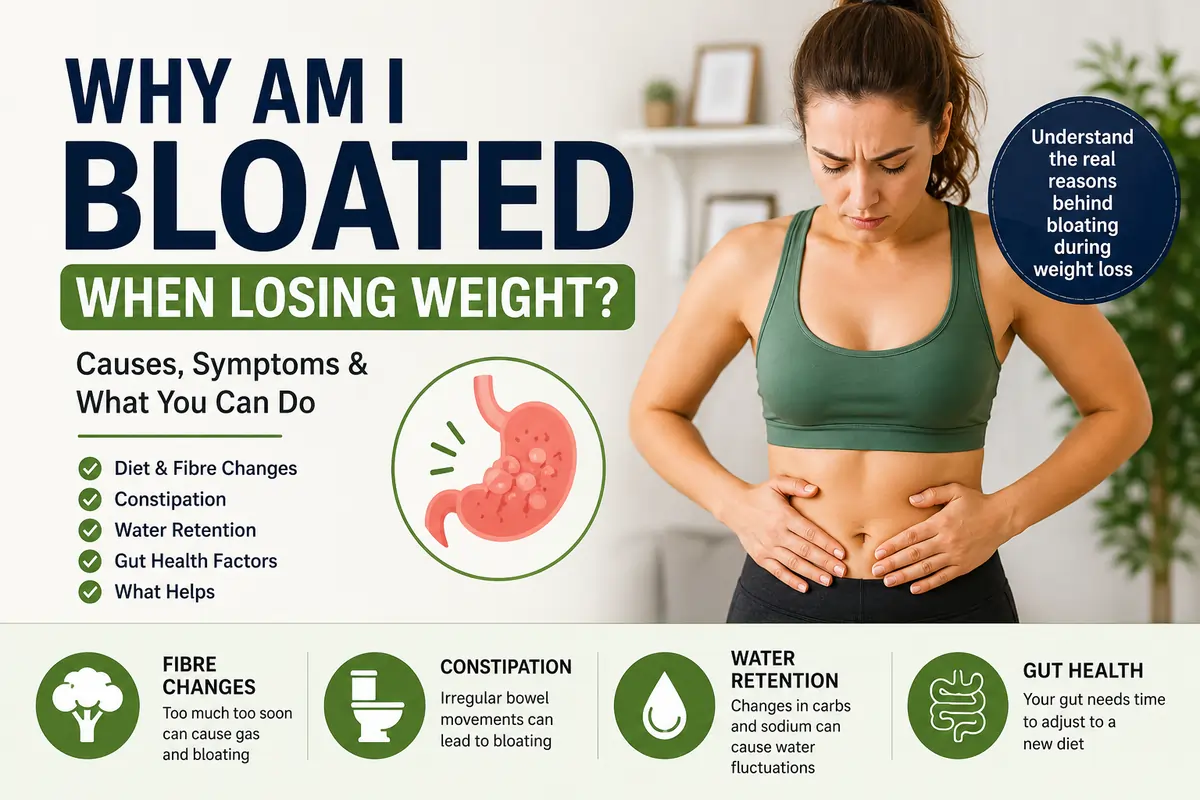
The key is to separate three things that often get confused:
Bloating
A feeling of fullness, pressure or tightness in the abdomen. It may be linked to gas, constipation, food volume, water balance or digestion.
Fat loss
A longer-term reduction in stored body fat. Fat loss does not happen or reverse overnight from one bloated day.
Water and stool weight
Scale changes can reflect fluid, food volume and bowel movements, not just body fat.
Digestive adjustment
Your gut may need time to adapt when you change fibre, meal size, protein, carbohydrates and eating timing.
Medical note: This article is educational only. Speak with a qualified healthcare professional if bloating is severe, persistent, painful, linked with vomiting, blood in stool, unexplained weight loss, fever, ongoing diarrhea, constipation that does not improve, or a major change in bowel habits.
Bloating during weight loss is usually caused by sudden diet changes, increased fibre, constipation, gas-producing foods, sugar alcohols, protein shakes, reduced carbohydrates, dehydration, or eating patterns that slow digestion. The fix is usually not to quit your diet. It is to adjust your food choices, fibre, fluids, meal timing and bowel routine so your gut can keep up.
Why Do I Feel Bloated When I Am Losing Weight?
You feel bloated when losing weight because your digestive system may be reacting to a new diet before your body has fully adjusted. A smaller waistline goal can still come with temporary stomach pressure, gas, constipation or water changes.
Most people expect weight loss to feel lighter straight away.
Sometimes it does.
But for many people, the first few weeks feel confusing. The scale may move down, but the stomach feels bigger. Clothes may feel tighter by evening. The lower abdomen may feel heavy even when calories are lower.
That does not automatically mean your weight-loss plan is failing.
It usually means one of these things is happening:
| What changed? | What it can do | How it may feel |
|---|---|---|
| You added more fibre quickly | Gut bacteria ferment more undigested carbohydrate | Gas, pressure, rumbling |
| You reduced food volume too much | Bowel movements may slow down | Constipation, lower belly heaviness |
| You increased protein | You may eat fewer fibre-rich foods | Sluggish digestion, hard stools |
| You started shakes or bars | Sweeteners, fibres or dairy ingredients may trigger symptoms | Gas, bloating, cramps |
| You cut carbs sharply | Water balance and food choices change | Scale swings, flatter some days, bloated other days |
Bloating is not one single problem. It is a symptom with several possible causes.
That is why the best fix depends on what changed in your diet.
What Are The Most Common Causes Of Bloating During Weight Loss?
The most common causes are sudden fibre increases, constipation, high-protein low-fibre diets, sugar alcohols, carbonated drinks, large salads, protein shakes, stress, faster eating and reduced fluid intake.
The tricky part is that many “healthy” weight-loss changes can still trigger bloating at first.
A person may replace takeaway meals with big salads, low-calorie wraps, lentils, protein bars, diet drinks and sugar-free snacks. On paper, the diet looks better. In the gut, the change may be too fast.
Big Salad Problem
Raw vegetables are healthy, but a sudden jump from low fibre to large salads every day can create gas and pressure.
Protein Bar Problem
Many bars contain added fibres or sugar alcohols that can trigger gas in sensitive people.
Low-Carb Problem
Cutting bread, oats, fruit and legumes may lower fibre intake if you do not replace them carefully.
Diet Drink Problem
Carbonation can increase swallowed air, and some sweeteners may not suit everyone.
NIDDK explains that gas-related symptoms can include belching, bloating, distention and passing gas, and that gas can enter the digestive tract from swallowed air and from bacteria breaking down certain undigested carbohydrates.
So when your food choices change, your gas pattern can change too.
Can Constipation Make You Bloated While Losing Weight?
Yes. Constipation is one of the most common reasons people feel bloated when losing weight. When stool moves slowly or becomes harder to pass, the abdomen can feel full, heavy or uncomfortable.
Dieting can increase constipation risk in a few simple ways.
You may be eating less total food. You may be eating fewer whole grains, beans, fruit or starchy vegetables. You may be drinking less because meals are smaller. You may also be moving less if your calories are too low and your energy drops.
NIDDK defines constipation as having fewer than three bowel movements a week, hard, dry or lumpy stools, stools that are painful or difficult to pass, or a feeling that not all stool has passed.
That matters because constipation can make weight loss feel like it is not working.
Real-World Pattern
Someone starts dieting on Monday. They eat less, increase protein and cut bread, rice and fruit. By Friday, they are eating fewer calories, but they have not had a proper bowel movement for several days. Their stomach feels bigger, even though fat loss may still be happening.
| Diet change | How it may cause constipation | What to adjust |
|---|---|---|
| Eating less overall | Less food volume can mean less stool volume | Include vegetables, fruit, oats, legumes or seeds gradually |
| High protein intake | Protein may replace fibre-rich foods | Add fibre-rich sides instead of protein-only meals |
| Low-carb dieting | Whole grains and fruit may drop too low | Keep some high-fibre carbohydrates if they suit you |
| Low fluid intake | Stool may become harder | Drink fluids consistently across the day |
| Less movement | Gut motility may slow | Walk after meals or add light daily activity |
For a deeper explanation, read our guide on what causes constipation.
Can Eating More Fibre Cause Bloating When Losing Weight?
Yes. Fibre can help digestion, but increasing fibre too quickly can cause bloating, gas and stomach pressure. The goal is not to avoid fibre. The goal is to increase it slowly and pair it with enough fluid.
This is one of the biggest weight-loss surprises.
Fibre is often a good thing. It supports fullness, bowel regularity and a healthier eating pattern. But the gut may not like a sudden jump.
For example, moving from white toast and takeaway meals to oats, chia seeds, broccoli, lentils, beans and protein bars in one week may be too much too soon.
NIDDK advises adding fibre a little at a time so the body gets used to the change.
Better Fibre Upgrade
Add one fibre-rich change at a time. For example, oats at breakfast first, then extra vegetables later in the week.
Harder Fibre Upgrade
Adding oats, chia, beans, raw salads, fibre bars and supplements all at once can overload a sensitive gut.
| Food change | Why bloating may happen | Gentler option |
|---|---|---|
| Huge raw salads | Large volume and fibre load | Mix cooked and raw vegetables |
| Beans and lentils daily | Fermentable carbohydrates | Start with small portions |
| Chia or flax suddenly | Rapid fibre increase | Start small and increase slowly |
| Fibre bars | Added fibres may trigger gas | Use whole foods first where possible |
| Fibre supplements | Too much too quickly can backfire | Introduce slowly and drink enough fluid |
Can High-Protein Diets Make You Bloated?
High-protein diets can contribute to bloating if protein replaces fibre-rich foods or if protein powders, bars or dairy-based shakes do not suit your digestion. Protein is useful during weight loss, but protein-only meals can leave the gut missing fibre and food variety.
Protein is not the enemy.
For many people, protein helps with fullness and supports muscle maintenance during weight loss. The problem starts when the plate becomes too narrow.
A diet built around chicken, eggs, tuna, shakes and bars may be low in fibre unless you deliberately add vegetables, fruit, legumes, oats, seeds or other fibre-rich foods.
What Most People Get Wrong
They blame protein itself, but the real issue is often what disappeared from the diet. If fruit, oats, beans, potatoes and whole grains vanish, digestion can become slower and bloating can increase.
| High-protein habit | Possible bloating trigger | Better approach |
|---|---|---|
| Two protein shakes per day | Dairy, sweeteners or gums may not suit you | Test one serving and compare symptoms |
| Protein bars daily | Added fibres and sugar alcohols can cause gas | Use whole-food snacks more often |
| Chicken and salad only | Low variety and too much raw volume | Add cooked vegetables or a fibre-rich carb |
| Very low-carb high-protein meals | Lower stool volume and less fibre | Include fibre that fits your calorie target |
Can Cutting Carbs Cause Bloating Or Scale Changes?
Cutting carbohydrates can change water balance, food choices and bowel regularity, which may make bloating and scale changes more noticeable. The issue is often not carbs alone, but how quickly the diet changes and what foods replace them.
Some people feel less bloated when they reduce refined carbohydrates. Others feel worse because they remove fibre-rich foods that helped bowel regularity.
Both can be true.
A lower-carb diet that includes vegetables, seeds, nuts, berries and enough fluid may feel fine. A lower-carb diet that removes oats, fruit, legumes and whole grains without replacing fibre can lead to constipation.
Low-Carb Works Better When
You still include enough fibre, fluids, minerals and food variety.
Low-Carb Feels Worse When
You remove most fibre-rich foods and rely mostly on protein, cheese, bars and shakes.
This is why bloating during weight loss should be read as feedback, not failure.
Is Bloating A Sign You Are Not Losing Fat?
No. Bloating does not automatically mean you are not losing fat. You can be in a calorie deficit and still feel bloated because gas, stool, water and food volume can change how your stomach feels from day to day.
This is where many people panic.
They eat well for a few days, feel bloated, then assume the plan is not working. So they cut more food, remove more carbs or add more supplements.
That can make the problem worse.
NIDDK describes a safe weight-loss program as one that includes a healthy reduced-calorie eating plan, physical activity when appropriate, support for healthy habits and a plan for maintaining weight loss. That is very different from reacting to every bloated day by making the diet stricter.
Better Way To Read Bloating
Ask what changed in your food, fluids, fibre, bowel routine, stress or exercise. Do not judge fat loss from one tight-stomach day.
What Should You Do If You Are Bloated While Losing Weight?
If you are bloated while losing weight, do not quit the plan immediately. First, identify the likely trigger, then adjust fibre, fluids, meal size, protein products, carbonated drinks and bowel routine.
Use this as a simple check.
| Problem | Likely Cause | What To Try First |
|---|---|---|
| Bloating after big salads | Too much raw volume or fibre at once | Use smaller portions and include cooked vegetables |
| Bloating after protein bars | Added fibres or sugar alcohols | Pause bars for a week and compare |
| Bloating with constipation | Low fibre, low fluid or low food volume | Increase fibre gradually and drink fluids consistently |
| Bloating after diet drinks | Carbonation or sweeteners | Switch to still water or unsweetened tea for a trial |
| Bloating after dairy shakes | Dairy sensitivity or formula ingredients | Try a different protein source or whole-food protein |
| Bloating by evening | Meal volume, gas, constipation or eating speed | Eat slower, walk after meals and review fibre load |
Step 1: Check Your Bowels
If you are not going regularly, constipation may be the main reason your stomach feels bloated.
Step 2: Slow Down Fibre
Keep fibre in the diet, but increase it gradually instead of adding several fibre-rich foods at once.
Step 3: Review Diet Foods
Protein bars, shakes, low-calorie snacks and sugar-free products are common hidden triggers.
Step 4: Walk After Meals
A short walk after meals may help digestion and can support your weight-loss routine.
Should You Take Probiotics Or Gut Supplements For Weight-Loss Bloating?
Some people consider probiotics or gut-health supplements when bloating appears during weight loss, but the best choice depends on the cause of the bloating. Supplements may help some people, but they cannot fix a diet that is too low in fibre, too low in fluid or too aggressive.
Before adding a supplement, ask:
- Am I constipated?
- Did I increase fibre too quickly?
- Did I add protein bars, shakes or sweeteners?
- Am I drinking enough fluid?
- Am I eating enough total food to support bowel movements?
If those basics are already handled, a gut-health supplement may be worth comparing. You can start with our guide to the best gut health supplements if you want to compare options for digestion, bloating and gut support.
Important: If bloating is severe, painful or persistent, do not use supplements to avoid getting medical advice. Digestive symptoms can have many causes.
What Mistakes Make Weight-Loss Bloating Worse?
The biggest mistake is making the diet stricter every time bloating appears. Many people cut more foods, reduce calories further or add more supplements, when the gut may simply need a calmer and more consistent routine.
Mistake 1: Adding Too Much Fibre At Once
A sudden jump in fibre can create gas and pressure, even when the foods are healthy.
Mistake 2: Going Protein-Only
Protein matters, but a diet with too little fibre can slow bowel movements.
Mistake 3: Using Too Many Diet Products
Bars, shakes, sweeteners and low-calorie snacks can be useful, but they can also trigger bloating.
Mistake 4: Ignoring Constipation
If stool is not moving well, bloating may continue no matter how clean the diet looks.
| Instead Of | Do This |
|---|---|
| Cutting more food | Check fibre, fluids and bowel movements first |
| Blaming one food immediately | Track patterns for a few days |
| Adding several supplements | Fix the basic routine first |
| Eating huge raw meals | Mix cooked and raw foods |
| Judging progress from one day | Look at weekly trends |
When Should You Worry About Bloating During Weight Loss?
You should seek medical advice if bloating is severe, persistent, worsening, painful, or comes with warning signs such as vomiting, blood in stool, fever, unexplained weight loss, ongoing diarrhea, or constipation that does not improve.
Most diet-related bloating is not serious. But some symptoms should not be brushed off as normal weight-loss discomfort.
See A Healthcare Professional If You Have
- Severe or worsening abdominal pain
- Persistent bloating that does not improve
- Blood in stool or bleeding from the rectum
- Vomiting
- Fever
- Unexplained weight loss
- Long-term constipation
- Ongoing diarrhea
- A major change in bowel habits
NIDDK advises speaking with a doctor if constipation does not go away with self-care or if constipation occurs with signs such as rectal bleeding, blood in stool or continual abdominal pain.
How Does This Connect To Gut Health And Weight Loss?
Bloating during weight loss sits at the overlap of gut health and weight management. Your calorie target matters, but your digestion, bowel regularity, food tolerance and eating pattern affect how sustainable the plan feels.
This is why gut health matters in a practical way.
If your plan causes constant bloating, constipation or discomfort, you are less likely to stay consistent. A good weight-loss routine should reduce calories without making your digestion feel worse every day.
For a broader explanation, read our article on whether gut health can affect weight loss.
Best Next Step
The best next step is to identify which diet change triggered the bloating, then adjust one thing at a time. Start with bowel movements, fibre speed, fluid intake, protein products and carbonated drinks before assuming the whole diet is wrong.
Simple 3-Day Reset
For the next three days, keep your calories reasonable, eat slowly, drink fluids consistently, reduce carbonated drinks, avoid stacking multiple protein bars or fibre products, and include a mix of cooked vegetables, protein and gentle fibre sources.
If bloating improves, the issue was likely related to food choices, fibre speed, gas, constipation or product tolerance.
If bloating continues or comes with warning signs, get medical advice.
Frequently Asked Questions
Why am I bloated even though I am eating less?
You may be bloated while eating less because lower food volume, lower fibre, lower fluid intake or a higher-protein diet can slow bowel movements. Bloating can also come from gas, diet products, sweeteners or sudden fibre changes.
Can losing weight cause bloating?
Weight loss itself does not directly cause bloating, but the diet changes people use to lose weight can. Common triggers include more fibre, fewer carbohydrates, more protein, shakes, bars, sweeteners, constipation and changes in eating timing.
Why is my stomach bigger while dieting?
Your stomach may feel bigger while dieting because of gas, constipation, food volume, water balance or digestive adjustment. This does not automatically mean you are gaining fat.
Can constipation make the scale go up during weight loss?
Constipation can affect how heavy and bloated you feel because stool remains in the digestive tract. It can also make short-term scale changes more confusing, even if your fat-loss plan is still on track.
Can too much fibre make me bloated?
Yes. Fibre is useful, but adding too much too quickly can cause gas and bloating. Increase fibre gradually and drink enough fluid so your gut has time to adjust.
Do protein shakes cause bloating?
Protein shakes can cause bloating for some people, especially if they contain dairy, gums, sweeteners or ingredients that do not suit that person’s digestion. Testing one product at a time can help identify the trigger.
Do carbs cause bloating?
Some carbohydrate foods can trigger bloating in some people, but carbohydrates are not automatically bad. Whole-food carbohydrate sources such as oats, fruit, legumes, potatoes and whole grains may also support fibre intake and bowel regularity.
Should I stop dieting if I feel bloated?
Not necessarily. First check whether the bloating is linked to fibre, constipation, protein products, carbonated drinks, sweeteners or meal size. If symptoms are severe, persistent or painful, seek medical advice.
What helps bloating during weight loss?
Helpful steps may include increasing fibre slowly, drinking fluids consistently, walking after meals, reducing carbonated drinks, limiting trigger foods, checking protein bars and shakes, and addressing constipation early.
When should I see a doctor for bloating?
See a healthcare professional if bloating is severe, persistent, worsening, painful or occurs with vomiting, blood in stool, fever, unexplained weight loss, ongoing diarrhea or constipation that does not improve.
Medical Disclaimer: This article is for educational purposes only and does not provide medical advice, diagnosis or treatment. Speak with a qualified healthcare professional about persistent digestive symptoms, weight-loss concerns or any supplement use.
