
Oral probiotics may help improve bad breath within two to four weeks. Some people notice no change. Studies looking at gum health often run for four to eight weeks, but the results are mixed. How well a probiotic works depends on the bacteria it contains and what is causing your problem.
If you have started taking oral probiotics, you probably want to know when you will see results. Will your breath smell better in a few days? Will your gums feel healthier after a month?
There is no single answer for everyone. Different oral probiotics contain different types of helpful bacteria. Some have been studied for bad breath, while others have been tested for gum health.
What Results Can You Expect Each Week?
Four weeks is a sensible time to check whether an oral probiotic is helping your breath. It is not a promise that you will see results by then.
| Time | What you may notice |
|---|---|
| First week | You may notice no difference. A minty taste after taking a lozenge is not proof that the probiotic is working. |
| Weeks 2–4 | Some people may notice fresher breath. Studies have found improvements in certain bad-breath tests during this period. |
| Weeks 4–8 | You can review whether your breath or gums have changed. Studies on gum health have shown mixed results. |
| After 8 weeks | If nothing has improved, speak to a dentist rather than assuming you need a higher dose or more time. |
These timeframes come from periods used in research. They do not mean every product works at the same speed.
Why Don’t Oral Probiotics Work Immediately?
Oral probiotics are not instant breath fresheners. They contain live bacteria that researchers are studying for their effects on the bacteria already living in your mouth.
Your mouth naturally contains many types of bacteria. Some are linked to bad breath and gum problems. Researchers want to know whether certain helpful bacteria can make a difference.
That is different from chewing a mint. A mint can cover up a smell for a short time. A probiotic needs to be studied for changes that last beyond its flavour.
For more background, read what the oral microbiome is.
Do Oral Probiotics Work Faster for Bad Breath or Gum Health?
There is better short-term evidence for some bad-breath improvements than for gum health. But neither result is guaranteed.
Bad breath
A review published in 2023 looked at seven studies on oral probiotics and bad breath. Some tests showed improvements within four weeks. The researchers also said that more good-quality studies are needed.
Another review published in 2025 found that several trials reported lower levels of gases that can cause bad breath. However, not every study found that people’s breath smelled better when checked by a professional.
In simple terms, oral probiotics may help bad breath, but they do not work for everyone.
Gum health
Some studies have tested oral probiotics for people with inflamed or bleeding gums. Results have been mixed. For example, an eight-week study found changes in certain mouth bacteria but no clear improvement in the gum-health measurements.
If your gums bleed regularly, do not wait for a supplement to fix the problem. A dentist can check for plaque buildup or gum disease.
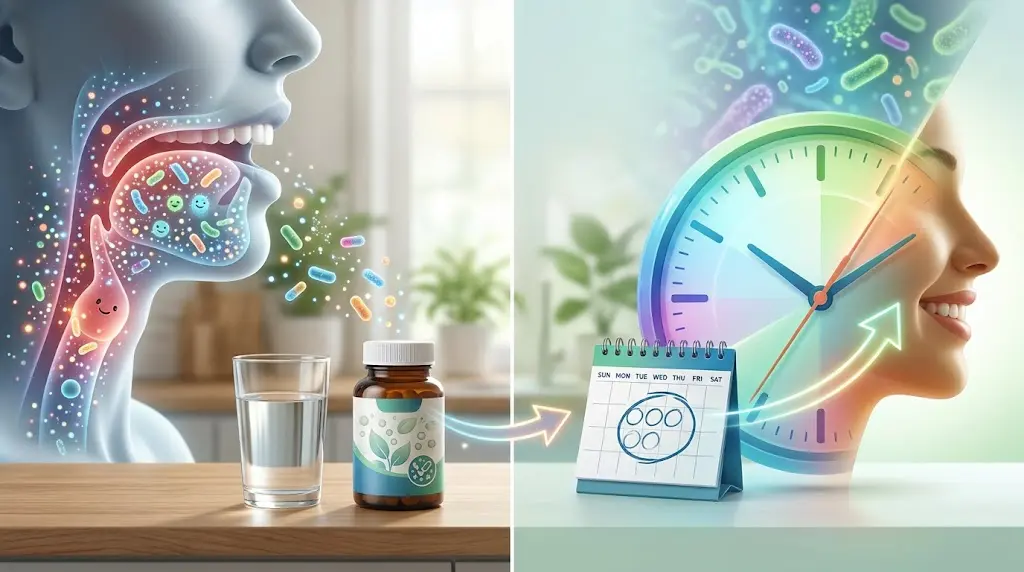
What Can Affect How Quickly Oral Probiotics Work?
The type of probiotic, the cause of your symptoms and your daily dental care can all affect the result.
- The bacterial strain: Not all probiotics are the same. A study on one strain does not prove that another strain works.
- The cause of bad breath: A coated tongue, dry mouth, cavities and gum disease may need different treatment.
- Daily cleaning: Probiotics do not remove plaque or tartar. You still need to brush and clean between your teeth.
- How you take the product: Follow the label. Taking extra tablets has not been shown to make them work faster.
A higher number of bacteria on the label, sometimes called CFU, does not automatically mean faster results.
How Can You Tell if Oral Probiotics Are Working?
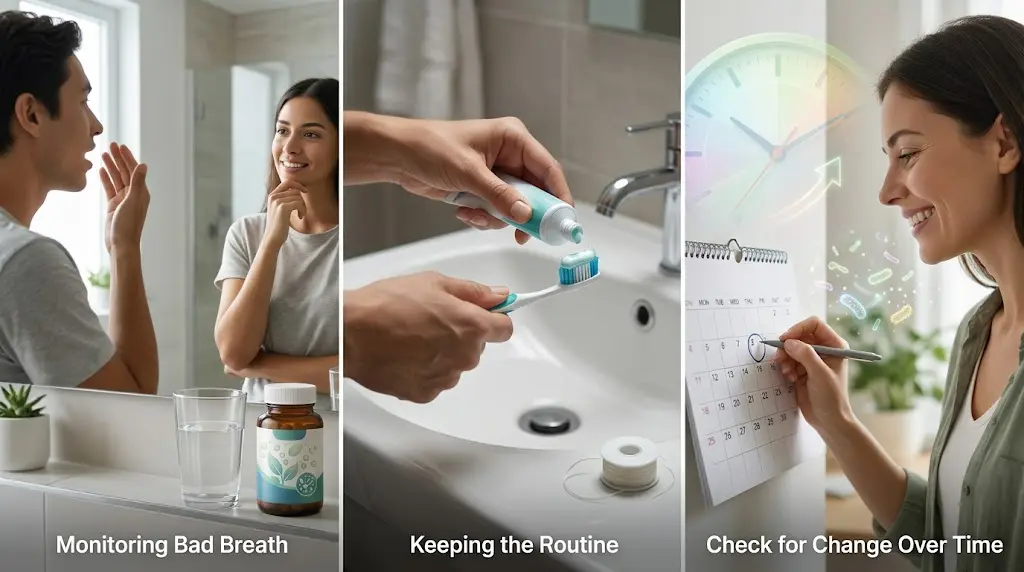
Pick one problem to check, then look for a clear change over time. Do not judge a probiotic only by how fresh your mouth feels right after taking it.
For example, if you are taking it for bad breath, notice whether the smell is less frequent after a few weeks. If someone you trust has noticed your breath before, their feedback may be more useful than trying to smell your own breath.
Keep brushing twice a day with fluoride toothpaste and cleaning between your teeth. If you change your toothpaste, mouthwash, brushing routine and probiotic all at once, you will not know which change helped.
If you want to understand the research in more detail, see do oral probiotics work?
What if Oral Probiotics Don’t Work After 30 Days?
If you notice no improvement after 30 days, check whether the probiotic has been studied for your particular problem. There is no good reason to increase the dose without professional advice.
Suppose your breath smells bad even after brushing. The problem could be your tongue, dry mouth, a cavity or gum disease. Taking a different probiotic may not solve it.
If bad breath keeps coming back, or your gums bleed, book a dental check. Finding the cause is more useful than trying supplement after supplement.
Should You Take Oral Probiotics Every Day?
Many oral probiotic studies use daily doses, but there is no single dose or schedule that works for every product. Follow the instructions on your product’s label.
Researchers also do not know whether any improvement will last after you stop taking a probiotic. More long-term research is needed.
Can Oral Probiotics Replace Brushing or Dental Treatment?
No. Oral probiotics cannot replace brushing, flossing or professional dental care. They do not remove hardened tartar or treat cavities and dental infections.
See a dentist if you have ongoing bad breath, bleeding gums, tooth pain or swelling. Seek urgent care if swelling comes with fever or trouble swallowing or breathing.
Frequently Asked Questions
Can oral probiotics work in three days?
There is not enough evidence to say they work in three days. A flavoured tablet might make your breath feel fresh right away, but that does not prove the probiotic has helped.
How long does Streptococcus salivarius K12 take to work?
K12 has been tested in studies lasting around four weeks, but there is no guaranteed result. One 30-day study did not find a clear advantage over a placebo in its main comparison.
Do oral probiotics help with morning breath?
They might help some types of bad breath, but there is not enough evidence to promise an improvement in morning breath. Dry mouth during sleep and bacteria on the tongue can also affect breath odour.
Should you stop if nothing changes after two weeks?
Two weeks may be too early to judge a product studied over four weeks. But if symptoms continue, especially bleeding or pain, ask a dentist rather than waiting.
Will taking more oral probiotics make them work faster?
No evidence shows that taking extra tablets makes oral probiotics work faster. Follow the suggested dose.
Will the results last when you stop taking them?
That is not yet clear. Some studies have looked at effects after treatment stopped, but there is not enough evidence to say benefits are permanent.
How Long Should You Give Oral Probiotics?
If you are taking an oral probiotic for bad breath, four weeks is a practical point to review the results. Gum-health research often looks at four to eight weeks, but improvement is not certain.
Choose a product with research on its exact bacterial strain, follow the label and keep up regular dental care. If your symptoms do not improve, ask a dentist to check the cause.
How Do You Choose the Right Oral Probiotic?
Not all oral probiotics are the same. Different products contain different bacteria, and some may be better suited to bad breath or gum health than others. The results also depend on the strains used and how consistently you take the product.
If you’re considering an oral probiotic, our best oral probiotics comparison explains what to look for, compares popular products, and helps you choose one based on your needs.
Scientific Sources
- 2023 systematic review: Oral probiotics and bad breath.
- 2025 review: Probiotics for bad breath.
- 2020 clinical trial: Streptococcus salivarius K12.
- Clinical trial: Probiotics and gingivitis.
- NIH: Probiotics and strain-specific effects.
Medical note: This article is for general information. It is not a substitute for advice from your dentist or healthcare professional.
