
Medical note: This article is for general education only. Speak with a qualified health professional if constipation is severe, persistent, new, painful, or comes with bleeding, vomiting, fever, unexplained weight loss, constant abdominal pain, or a major change in bowel habits.
Weight loss can cause constipation when you eat less total food, reduce fibre-rich carbohydrates, increase protein without enough plant foods, drink less fluid, move less, or change your routine too quickly. The bowel often needs enough food volume, fibre, fluid and movement to keep stool soft and easier to pass.
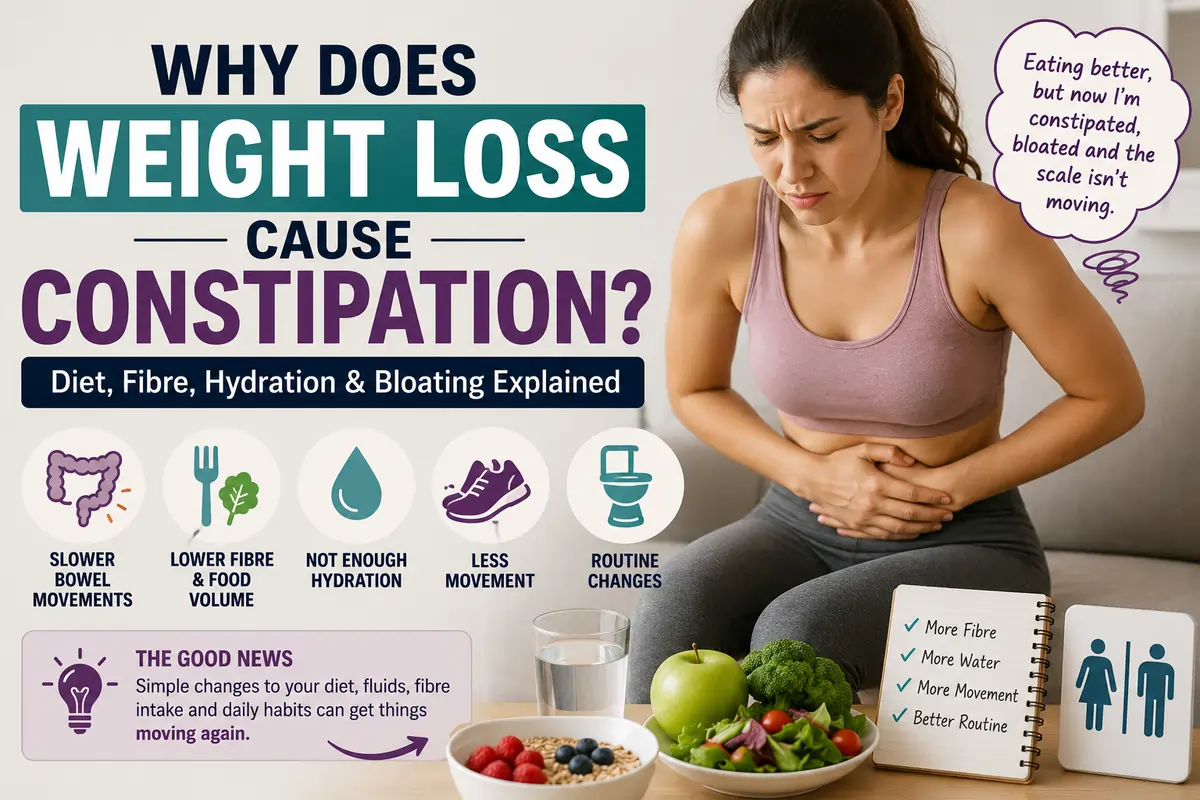
You started eating better.
You cut calories. You added more protein. Maybe you reduced bread, rice, snacks, desserts, takeaway meals or late-night eating.
Then something frustrating happened.
Your bowel movements slowed down. Your stomach felt bloated. The scale stopped moving, or even went up.
This is common during weight loss, especially when the diet change is sudden. It does not always mean the diet is wrong. It usually means the digestive system has not adjusted to the new food volume, fibre intake, fluid intake or eating routine.
Common Questions This Guide Answers
This guide answers the everyday questions people ask when weight loss, constipation, bloating and scale changes happen at the same time. These are the questions that matter when someone is trying to eat better but feels worse digestively.
Diet And Constipation Questions
- Why am I constipated after starting a diet?
- Can eating less make you constipated?
- Can a high-protein diet cause constipation?
- Can low-carb diets cause constipation?
- Why am I bloated after eating healthier?
Scale And Symptom Questions
- Can constipation make the scale go up?
- Can constipation look like belly fat?
- Why am I losing weight but feel bloated?
- Does fibre help constipation during weight loss?
- What should I eat if I am constipated while dieting?
What Does Constipation Mean During Weight Loss?
Constipation during weight loss means your bowel movements become less frequent, harder, drier, more difficult to pass, or leave you feeling like you have not fully emptied. It can happen even when your diet is healthier than before.
Constipation is not only about how often you go to the bathroom.
It can also mean:
- hard or dry stools
- straining
- painful bowel movements
- bloating or abdominal pressure
- feeling like stool is still left behind
- fewer bowel movements than usual for you
During weight loss, constipation is often connected to the structure of the new diet. The person may be eating fewer calories, fewer carbohydrates, less total food volume, less fibre, or more protein-heavy meals.
Key point: A diet can be lower in calories and still be poor for bowel regularity if it removes too much fibre, fluid, food volume or routine.
Why Does Weight Loss Cause Constipation?
Weight loss can cause constipation because dieting often changes the amount, type and timing of food moving through the digestive tract. When food volume, fibre, fluids or movement drop too quickly, stool may become smaller, harder or slower to pass.
This is why constipation often appears after a “clean eating” reset.
The person is not necessarily doing anything extreme. They may simply replace large mixed meals with smaller protein-focused meals, shakes, salads or low-carb options.
That can reduce calories, but it can also reduce stool bulk.
| Diet Change | How It Can Affect Bowel Movements | Common Result |
|---|---|---|
| Eating less total food | Less material enters the bowel | Smaller, less frequent stools |
| Cutting bread, oats, fruit, beans or grains | Fibre intake may drop | Harder stools or slower movement |
| Increasing protein without fibre | Protein replaces plant foods | Constipation, bloating or dryness |
| Drinking less fluid | Stool may become harder | Straining or discomfort |
| Moving less | Bowel movement stimulation may drop | Slower bowel pattern |
| Changing routine suddenly | Bathroom timing changes | Missed urges or irregularity |
Can Eating Less Make You Constipated?
Yes, eating less can make you constipated if the lower food intake reduces stool bulk, fibre intake or regular bowel stimulation. The bowel often responds to how much food enters the digestive system.
This is one of the most overlooked reasons constipation happens during dieting.
When you reduce calories, you may also reduce total food volume. Less food volume can mean less waste moving through the colon. If the new diet is also low in fibre, stool may become harder and smaller.
This can happen even if the diet looks healthy.
Real-world example
Before dieting, someone eats cereal, sandwiches, fruit, pasta, snacks and dinner. After dieting, they switch to eggs, chicken salad, protein shakes and a small dinner.
The second diet may be lower in calories and higher in protein, but it may also contain much less fibre and less total stool-forming material. Constipation can follow.
Can A High-Protein Diet Cause Constipation?
A high-protein diet can contribute to constipation when protein replaces fibre-rich foods such as oats, beans, lentils, vegetables, fruit and whole grains. Protein itself is not the only issue. The bigger issue is what disappears from the plate.
Weight loss diets often push protein for good reasons. Protein can help with fullness and muscle retention.
But problems start when the plate becomes mostly:
- chicken
- eggs
- fish
- lean meat
- protein powder
- Greek yoghurt
- cheese
Those foods can fit into a weight loss plan, but many of them do not provide much fibre. If they replace legumes, fruit, vegetables, oats and whole grains, bowel movements may slow.
Better approach: Keep protein, but pair it with fibre. Think chicken with vegetables and lentils, Greek yoghurt with berries and chia, or eggs with wholegrain toast and fruit.
Can Low-Carb Diets Cause Constipation?
Low-carb diets can cause constipation when they remove fibre-rich carbohydrate foods too quickly. Cutting refined sugar is different from removing most fruit, legumes, oats, whole grains and starchy vegetables.
Many people reduce carbohydrates when trying to lose weight.
That may reduce calories for some people, but it can also reduce fibre if the diet becomes too restrictive.
Common fibre-rich foods that may be reduced on a low-carb diet include:
- oats
- wholegrain bread
- brown rice
- beans
- lentils
- chickpeas
- apples
- pears
- berries
- sweet potato
The result can be lower stool bulk and slower bowel movements.
Low-carb dieting can also change water balance early on. Some people lose water quickly in the first week, and if fluid intake does not keep up, stools can feel harder.
Why Am I Bloated And Constipated While Losing Weight?
You may feel bloated and constipated while losing weight because stool is moving more slowly, gas is building up, fibre has changed too quickly, or the new diet includes foods your gut is still adjusting to. Bloating does not automatically mean fat gain.
This is where weight loss becomes confusing.
You might be eating fewer calories and still feel bigger around the stomach. The scale might also stay the same for several days.
That can happen because the scale reflects more than body fat.
| What The Scale Can Reflect | How It Changes During Dieting |
|---|---|
| Body fat | Changes slowly over weeks |
| Stool | Can increase temporarily with constipation |
| Water | Can shift with salt, carbs, hormones and hydration |
| Food volume | Can change from meal size and timing |
| Gas and bloating | Can change waist comfort without changing fat mass |
Helpful distinction: Fat gain does not happen overnight from a few high-fibre meals. A sudden tight stomach is more likely to involve gas, stool, water or food volume.
For the broader connection between digestion and weight management, read can gut health affect weight loss.
Can Constipation Make The Scale Go Up?
Yes, constipation can make the scale go up temporarily because stool remains in the bowel for longer. That does not mean you gained body fat.
This is why daily weigh-ins can be emotionally misleading.
If you have not had a proper bowel movement for two or three days, the scale may show extra weight from stool and fluid. This can hide actual fat loss in the short term.
Look at weight trends across two to four weeks instead of judging your progress from one weigh-in.
Simple interpretation
If calories are controlled, waist measurements are slowly improving, and constipation is present, a short scale stall may be digestive weight rather than fat-loss failure.
Does Fibre Help Constipation During Weight Loss?
Fibre can help constipation during weight loss by adding bulk to stool and helping bowel movements become easier to pass. The key is to increase fibre gradually and drink enough fluids.
Many people make the mistake of jumping from very little fibre to a large amount of fibre overnight.
That can backfire.
Too much fibre too quickly may cause:
- gas
- bloating
- cramps
- pressure
- irregular stools
A better plan is to add one fibre-rich food at a time.
| Instead Of | Try | Why |
|---|---|---|
| Adding fibre powder, beans, bran and chia all at once | Add oats at breakfast for a few days | Easier to assess tolerance |
| Cutting all carbs | Keep berries, vegetables, legumes or whole grains in suitable portions | Supports fibre intake |
| Eating protein alone | Pair protein with vegetables or fruit | Improves meal volume and stool bulk |
| Drinking less to avoid scale weight | Drink consistently through the day | Helps fibre work better |
Can Not Drinking Enough Water Cause Constipation While Dieting?
Yes, not drinking enough fluid can contribute to constipation, especially when fibre intake increases. Fibre needs enough fluid to help stool stay softer and easier to pass.
This matters during weight loss because some people unintentionally drink less.
They may skip meals, reduce soups or fruit, drink more coffee, exercise more, or avoid water because they dislike temporary water weight.
That can make stools drier.
The goal is not to force excessive water. The goal is steady hydration that matches your body size, climate, activity level, food intake and health needs.
Important: People with kidney disease, heart disease, fluid restrictions, pregnancy, medication changes or complex medical needs should ask a health professional how much fluid is appropriate.
Can Weight Loss Supplements Cause Constipation?
Some supplements may contribute to constipation, especially if they reduce appetite, change fluid balance, contain certain minerals, or replace fibre-rich meals. Do not assume the diet is the only cause.
Constipation can sometimes appear after starting:
- protein powders
- meal replacement shakes
- iron supplements
- calcium supplements
- fibre supplements taken without enough fluid
- appetite-control products
- fat-loss products with stimulants
The cause is not always the active ingredient. Sometimes the supplement replaces a real meal that would have contained fibre, fluid and food volume.
If constipation started shortly after a new supplement, check the timing carefully and speak with a health professional if symptoms persist or you are using medication.
For a broader comparison of digestive support products, see our guide to the best gut health supplements.
What Helps Constipation During Weight Loss?
Constipation during weight loss is usually best approached by improving fibre, fluids, food volume, movement and bathroom routine before relying on stronger products. Small changes are often easier to maintain than dramatic fixes.
1. Add Fibre Slowly
Add fibre gradually so your gut can adjust. Choose one change first, such as oats, berries, vegetables, lentils or chia seeds.
Do not add several fibre-heavy foods and a fibre supplement on the same day.
2. Keep Enough Food Volume
Very small meals can slow bowel movements because less material enters the digestive tract. Lower calories do not have to mean tiny meals.
Build meals around lean protein, vegetables, fruit, legumes, soups, whole grains or other filling foods that match your plan.
3. Pair Protein With Plants
Protein supports weight loss, but protein works better for digestion when it is paired with plant foods. A chicken breast alone is different from chicken with vegetables, lentils and a piece of fruit.
4. Drink Fluids Consistently
Consistent fluid intake helps stool stay softer, especially when fibre increases. Pay attention to thirst, urine colour, exercise, climate and stool comfort.
5. Walk After Meals
Walking can support regular bowel movement patterns and make digestion feel easier. It does not need to be intense.
A 10 to 15 minute walk after one or two meals may be enough to help some people feel more regular.
6. Use The Bathroom When You Feel The Urge
Ignoring the urge to go can make constipation worse for some people. Give yourself enough time, especially after breakfast or morning coffee if that is when your bowel usually responds.
7. Review Medication And Supplement Changes
Some medicines and supplements can contribute to constipation. Do not stop prescribed medication on your own. Ask a health professional if constipation started after a medication or supplement change.
What Should You Avoid When Constipated During Weight Loss?
Avoid extreme diet changes, too much fibre too fast, under-eating, dehydration, overusing laxatives and blaming one food without looking at the full routine. Constipation usually has more than one contributor.
Avoid Going Too Low In Food Volume
Very low-calorie plans can reduce stool bulk. If bowel movements slow down, check whether your meals are too small or too low in plant foods.
Avoid Fibre Overcorrection
Adding a large fibre dose overnight can worsen bloating. Build fibre gradually and drink enough fluid.
Avoid Long-Term Laxative Use Without Advice
Some laxatives are intended for short-term use. Speak with a health professional if you need them often.
Avoid Ignoring Warning Signs
Constipation with bleeding, constant pain, vomiting, fever or unexplained weight loss needs medical attention.
Problem, Cause And What May Help
The best fix depends on what changed when the constipation started. Match the solution to the likely cause instead of adding random supplements.
| Problem | Possible Cause | What May Help |
|---|---|---|
| Constipated after starting a diet | Less total food volume | Add low-calorie, high-volume foods such as vegetables, fruit, soups or legumes |
| Hard stools | Low fluid intake or low fibre | Increase fluids and add fibre gradually |
| Bloating after adding fibre | Fibre increased too fast | Reduce the dose, then build up slowly |
| Constipation on high protein | Protein replacing plant foods | Pair protein with vegetables, fruit, beans, oats or whole grains |
| Constipation on low carb | Less fruit, grains or legumes | Use lower-carb fibre options such as vegetables, berries, nuts or seeds if suitable |
| Scale went up while constipated | Stool and water changes | Watch longer-term trends instead of one weigh-in |
When Should You See A Doctor For Constipation During Weight Loss?
You should see a doctor if constipation does not improve with self-care, is new or severe, or comes with warning symptoms. Do not use diet changes or supplements to delay medical assessment.
Get medical advice promptly if constipation comes with:
- blood in the stool
- bleeding from the rectum
- constant abdominal pain
- vomiting
- fever
- inability to pass gas
- unexplained weight loss
- new bowel changes after age 50
- a family history of colon or rectal cancer
- constipation that continues despite sensible self-care
Safety note: Weight loss should be intentional and explainable. Losing weight without trying, especially with bowel changes, pain or bleeding, should be checked by a health professional.
For a broader explanation of constipation triggers, read what causes constipation.
FAQ About Weight Loss And Constipation
Why am I constipated after starting a diet?
You may be constipated after starting a diet because you are eating less total food, less fibre, fewer carbohydrates, more protein, drinking less fluid or changing your routine too quickly. The bowel often needs enough food volume, fibre and fluid to stay regular.
Can eating less make you constipated?
Yes, eating less can make you constipated if it reduces stool bulk and fibre intake. Smaller meals can mean less material moving through the bowel.
Can a high-protein diet cause constipation?
A high-protein diet can contribute to constipation when it replaces fibre-rich plant foods. The issue is usually not protein alone, but the lack of fibre, fluid and food variety around it.
Can low-carb diets cause constipation?
Low-carb diets can cause constipation if they remove too many fibre-rich foods such as fruit, oats, legumes, whole grains and starchy vegetables. Lower-carb diets need careful fibre planning.
Can constipation make the scale go up?
Yes, constipation can make the scale go up temporarily because stool remains in the bowel longer. This is not the same as gaining body fat.
Can constipation look like belly fat?
Constipation can make the stomach look or feel larger because of stool buildup, gas and bloating. This can change waist comfort without reflecting true fat gain.
Does fibre help constipation while dieting?
Fibre can help constipation while dieting, especially when increased gradually and paired with enough fluid. Adding too much fibre too quickly can worsen gas and bloating.
Should I take probiotics for constipation during weight loss?
Probiotics may help some people with constipation, but they are not a guaranteed fix. Effects depend on the strain, dose, person and underlying cause of constipation.
What should I eat if I am constipated while dieting?
Choose fibre-rich foods that fit your calorie target, such as vegetables, berries, oats, lentils, beans, chia seeds, whole grains, nuts or fruit. Increase fibre slowly and drink enough fluids.
How long does diet constipation last?
Diet-related constipation may improve within days to a couple of weeks once fibre, fluids, food volume and routine are corrected. If it persists, worsens or comes with warning symptoms, seek medical advice.
Final Answer: Why Does Weight Loss Cause Constipation?
Weight loss can cause constipation when the new diet reduces food volume, fibre, fluids, carbohydrates, movement or bathroom routine too quickly. This is especially common with high-protein, low-carb or very low-calorie diets.
The solution is not to quit weight loss.
The solution is to make the plan easier for your digestive system to tolerate.
For most people, that means eating enough fibre-rich foods, pairing protein with plants, drinking fluids consistently, walking regularly, avoiding extreme restriction and increasing fibre slowly.
Next Step
If constipation is making weight loss feel harder, review your fibre, fluids, food volume and movement before adding more supplements.
