
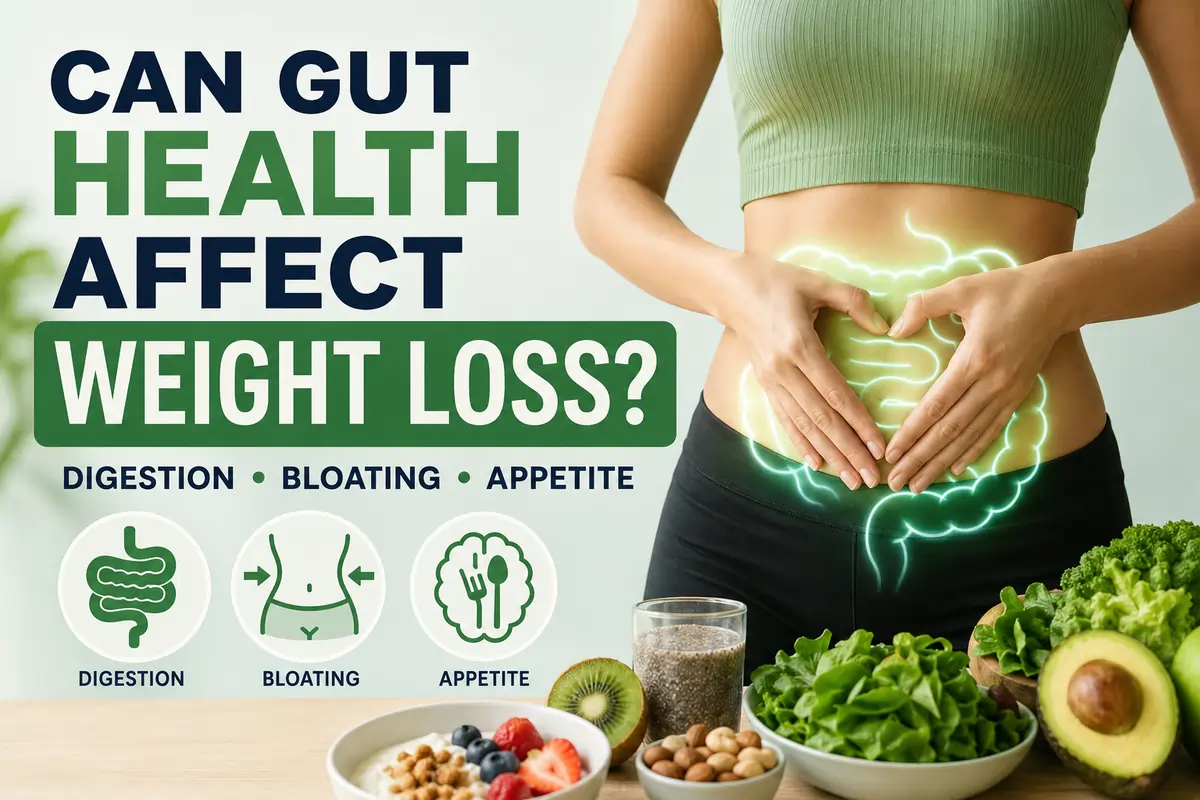
Gut health may affect weight loss indirectly by influencing digestion, bloating, bowel regularity, appetite signals and how comfortable you feel while changing your diet. It does not replace a calorie deficit, protein intake, physical activity, sleep or medical care.
Most people think about weight loss as a simple body fat question.
Eat less. Move more. Watch the scale.
That still matters, but it is not the whole picture. The digestive system can change how your body feels during weight loss. A person can be losing fat and still feel bloated, backed up, heavy or uncomfortable. That is one reason gut health is now part of many weight management conversations.
The important part is to separate realistic support from exaggerated claims.
A healthier gut will not magically burn fat. A probiotic will not cancel out overeating. A fibre supplement will not fix every weight issue. But digestion, stool regularity, gut bacteria, food tolerance and appetite patterns can all affect how sustainable a weight loss plan feels.
Common Questions This Guide Answers
This guide answers the real questions people ask when weight loss and gut symptoms seem connected. Many of these questions come from everyday frustration rather than medical terminology.
Weight And Digestion Questions
- Can gut health affect weight loss?
- Can bad gut health stop me losing weight?
- Why am I eating better but still feel bloated?
- Can constipation make the scale go up?
- Can bloating make it look like belly fat?
Probiotic And Fibre Questions
- Do probiotics help you lose weight?
- Are probiotics better than fibre for weight loss?
- Can fibre help with appetite?
- Why do I feel worse after increasing fibre?
- What should I do if healthy eating makes me constipated?
What Is Gut Health?
Gut health refers to how well your digestive system breaks down food, absorbs nutrients, moves stool and maintains a balanced gut microbiome. It includes the stomach, small intestine, large intestine, gut bacteria, bowel habits, digestive comfort and the gut lining.
When people say they have poor gut health, they usually mean they deal with symptoms such as bloating, gas, constipation, diarrhoea, stomach discomfort or irregular bowel movements.
Those symptoms do not always mean something serious is wrong. They can happen after dietary changes, low fibre intake, poor hydration, stress, travel, medication changes or sudden shifts in eating patterns.
Gut health matters for weight loss because a weight loss plan has to be repeatable. If a person feels bloated, uncomfortable or backed up every time they try to eat healthier, they are less likely to keep going.
Simple definition: Gut health is not just about probiotics. It is the combined function of digestion, bowel regularity, gut bacteria, food tolerance and digestive comfort.
Can Gut Health Affect Weight Loss?
Gut health can affect weight loss indirectly, but it is not the main driver of fat loss. Fat loss still depends mostly on long-term energy balance, but gut health can influence appetite, fullness, bloating, constipation and dietary consistency.
This distinction matters.
If someone asks, “Can gut health make me lose weight?” the honest answer is that gut health alone is unlikely to cause meaningful fat loss.
If someone asks, “Can gut health make weight loss easier or harder?” the answer is yes, for some people.
Here is the difference.
| Question | Direct Answer | Why It Matters |
|---|---|---|
| Can gut health burn fat? | No, not directly. | Fat loss still requires a sustained energy deficit. |
| Can poor digestion affect weight loss progress? | It can affect how progress feels. | Bloating and constipation can make the scale and waist feel worse even when fat loss is occurring. |
| Can gut bacteria influence appetite? | Possibly, through gut-derived signals and fermentation by-products. | This may affect hunger, fullness and food choices, but it is not a quick fix. |
| Can fibre support weight management? | Yes, mainly by improving fullness and bowel regularity. | Fibre-rich foods can make a lower-calorie diet easier to maintain. |
| Can probiotics help with weight loss? | Maybe in specific situations, but evidence is mixed. | Probiotics are strain-specific and should not be treated as fat-loss pills. |
How Does The Gut Microbiome Affect Weight Management?
The gut microbiome may influence weight management by helping digest certain fibres, producing short-chain fatty acids and interacting with appetite and metabolic signals. This does not mean gut bacteria control body weight on their own.
The gut microbiome is the community of microorganisms that live in the digestive tract. These microbes interact with food, especially plant fibres that the human body cannot fully digest by itself.
When gut bacteria ferment some fibres, they can produce compounds called short-chain fatty acids. These compounds are being studied for their relationship with gut lining health, inflammation, appetite regulation and metabolic function.
That sounds promising, but it should be kept in proportion.
The gut microbiome is one part of the weight management picture. Food intake, protein, muscle mass, sleep, medications, hormones, stress, medical conditions and physical activity still matter heavily.
Practical answer: A healthier gut microbiome may support the conditions that make weight management easier, but it should not be sold as the reason weight loss happens.
Can Bloating Make It Look Like You Are Gaining Belly Fat?
Bloating can make the stomach look and feel larger, but bloating is not the same as body fat. Bloating is usually related to gas, fluid shifts, stool buildup, food tolerance or digestive speed.
This is one of the biggest reasons people think their weight loss plan is failing.
Someone may start eating more vegetables, legumes, oats, protein foods or fibre supplements. Those changes may be useful, but if they happen too quickly, the digestive system may need time to adjust.
The result can be:
- more gas
- a tighter stomach
- heavier feeling after meals
- temporary scale increase
- more frequent bathroom changes
That can feel like fat gain, especially around the waist.
But fat gain does not usually happen overnight from a salad, a bowl of oats or a higher-fibre dinner. A sudden increase in stomach size is more likely to be bloating, fluid, stool or food volume.
Real-world example
A person switches from toast and coffee for breakfast to Greek yoghurt, berries, chia seeds and oats. Nutritionally, that may be a better breakfast. But if their previous fibre intake was low, the sudden change can create gas and bloating for the first week or two.
The issue is not that the healthy meal is “bad.” The issue is that the change was too fast for their current digestive pattern.
Can Constipation Make The Scale Go Up?
Constipation can make the scale go up temporarily because stool remains in the bowel for longer. This is not the same as gaining body fat, but it can make progress feel confusing.
Constipation can involve fewer than three bowel movements per week, hard or dry stools, painful stools, or the feeling that not all stool has passed. It can happen for many reasons, including low fibre intake, not drinking enough liquids, low physical activity, medicines, supplements and routine changes.
During weight loss, constipation may become more noticeable when someone:
- cuts calories suddenly
- eats less total food volume
- reduces carbohydrates sharply
- increases protein but not fibre
- drinks less water than usual
- starts iron, calcium or other supplements
- moves less because they feel tired
This is why the scale can be misleading over a few days.
A person may be losing fat slowly while also carrying extra stool, water or food volume. The short-term number can hide the longer-term direction.
Helpful distinction: If your waist feels tight, your bowel movements have slowed and your weight jumped in two days, that is more likely to be digestive fluctuation than true fat gain.
For a deeper explanation of constipation causes, read what causes constipation.
Do Probiotics Help You Lose Weight?
Probiotics may support gut health in some cases, but they should not be treated as a guaranteed weight loss solution. Their effects depend on the strain, dose, person, diet, health status and reason they are being used.
Probiotics are live microorganisms intended to provide health benefits when consumed. They are found in fermented foods and dietary supplements.
The problem is that many supplement pages talk about probiotics as if all strains do the same thing.
They do not.
A probiotic used for antibiotic-associated diarrhoea is not automatically the same as one studied for constipation, bloating or weight management. Even within the same genus, different strains can behave differently.
For weight loss, probiotics may be more realistic as a support tool than a primary fat-loss method.
| Probiotic Claim | Better Interpretation |
|---|---|
| “Probiotics burn belly fat.” | Too strong. Human results are mixed and strain-specific. |
| “Probiotics improve digestion.” | Possible for some people, depending on the strain and symptom. |
| “Probiotics fix bloating.” | Sometimes they help, sometimes they worsen gas at first. |
| “Everyone should take probiotics.” | No. People with serious illness or weakened immune systems should speak with a health professional first. |
Supplement caution: Probiotic supplements are not all equal. Look for the exact strain, colony forming units, storage instructions, third-party testing where available and a clear reason for use.
Is Fibre More Important Than Probiotics For Weight Loss?
For most people, fibre is the better first focus because it supports fullness, stool regularity and the gut bacteria already living in the digestive tract. Probiotics may help in specific cases, but fibre is the daily foundation.
Fibre-rich foods include vegetables, fruits, legumes, oats, whole grains, nuts and seeds.
Fibre can support weight management in several practical ways.
- It adds volume to meals.
- It can help meals feel more filling.
- It supports bowel regularity.
- It feeds certain beneficial gut bacteria.
- It can slow digestion depending on the fibre type.
But more fibre is not always better immediately.
If someone currently eats very little fibre, suddenly adding large amounts of beans, bran, greens, chia seeds and fibre powder can cause bloating, cramps or gas.
The better approach is gradual.
Better First Step
Add one fibre-rich food at a time. For example, add oats at breakfast or lentils at lunch before adding multiple fibre supplements.
Common Mistake
Increasing fibre without increasing fluids. Fibre needs enough liquid to support stool softness and bowel movement comfort.
If you are comparing supplement options, see our guide to the best gut health supplements.
Why Do I Feel Bloated After Eating Healthy?
You may feel bloated after eating healthy because your gut is adjusting to more fibre, different carbohydrates, higher food volume or new fermented foods. This does not always mean the food is wrong for you.
This is common when people move from a lower-fibre diet to a diet with more:
- beans and lentils
- broccoli, cabbage or cauliflower
- oats or bran
- protein bars with sugar alcohols
- prebiotic fibres such as inulin
- kombucha, kefir or fermented vegetables
Healthy foods can still cause symptoms when the change is sudden.
There is also a difference between normal adjustment and poor tolerance. Mild gas after increasing fibre can be normal. Severe pain, persistent diarrhoea, vomiting, blood in the stool or unexplained weight loss is not something to ignore.
Direct answer: If healthy eating makes you bloated, reduce the speed of change before blaming every healthy food. Add fibre slowly, drink enough fluids and track which foods repeatedly cause symptoms.
What Do Most People Get Wrong About Gut Health And Fat Loss?
Most people get it wrong by treating gut health as either magic or meaningless. The more accurate view is that gut health can support weight loss behaviour, but it does not override the basics of fat loss.
There are two common extremes.
The first extreme is the “gut reset” idea. This makes people believe they need a cleanse, detox tea or expensive supplement stack before they can lose weight.
The second extreme is ignoring digestion completely. This makes people push harder on calories while constipation, bloating, poor sleep or digestive discomfort make the plan harder to follow.
The middle view is more useful.
| Common Belief | Better View |
|---|---|
| “I need to fix my gut before I can lose weight.” | You can improve gut habits while working on sustainable nutrition. |
| “Bloating means I am gaining fat.” | Bloating can change waist size without reflecting fat gain. |
| “A probiotic will solve my weight.” | Probiotics may support some gut symptoms, but they are not a fat-loss substitute. |
| “Fibre is always good, so I should add as much as possible.” | Fibre is useful, but increasing too fast can worsen bloating. |
| “The scale is always accurate.” | The scale reflects fat, fluid, stool, food volume and hormonal changes. |
Why Does Weight Loss Sometimes Cause Constipation?
Weight loss can sometimes lead to constipation because people often eat less total food, reduce carbohydrates, increase protein, drink less fluid or cut out fibre-rich foods without replacing them. The bowel usually works better with enough food volume, fibre, fluid and movement.
This happens often with aggressive dieting.
A person may remove bread, rice, fruit, legumes, snacks and higher-calorie meals. Then they replace them with lean protein, shakes, eggs, salads and coffee.
Calories may drop, but stool bulk may also drop.
Less stool bulk can mean slower bowel movements. If fluid intake also drops, stools may become harder and more difficult to pass.
Problem Cause Fix
| Problem | Possible Cause | What May Help |
|---|---|---|
| Constipation after starting a diet | Less total food, less fibre or less fluid | Add fibre-rich foods gradually and increase fluids |
| Bloating after eating more vegetables | Sudden fibre increase | Reduce portion size, then build up slowly |
| Scale jumps despite dieting | Stool, water, sodium, hormones or food volume | Look at 2 to 4 week trends, not one weigh-in |
| Gas after probiotic or prebiotic supplement | Gut bacteria adjusting or poor tolerance | Use a lower dose or pause and reassess |
Can Gut Health Affect Appetite And Cravings?
Gut health may affect appetite through digestion speed, fibre fermentation, fullness signals, blood sugar response and food tolerance. But cravings are also affected by sleep, stress, habits, restriction, environment and emotional patterns.
People often want one simple reason for cravings.
But cravings are rarely caused by one thing.
A low-fibre, low-protein breakfast may leave someone hungry by mid-morning. Poor sleep may increase snack cravings. Stress may increase comfort eating. A strict diet may make forbidden foods feel more attractive.
Gut health can be part of that picture because meals that digest well and keep you full are easier to repeat.
For weight management, the practical question is not “Which gut hack removes cravings?”
The better question is “Which meals keep me full, comfortable and regular enough to repeat?”
Useful test: A good weight loss meal should not only be low in calories. It should also be satisfying, digestible and realistic for your normal week.
What Helps Support Gut Health During Weight Loss?
The best way to support gut health during weight loss is to build a diet that includes enough fibre, protein, fluids, plant variety and regular meals without changing everything at once. Supplements may help some people, but the foundation is still daily food and routine.
Here is a practical order to follow.
1. Increase Fibre Gradually
Increase fibre slowly so your gut has time to adjust. Sudden fibre increases can cause bloating, gas or cramps, especially if your previous diet was low in plant foods.
Start with one change at a time. Add berries to breakfast, vegetables to lunch or lentils to one meal. Give your gut several days before adding more.
2. Keep Protein High Enough
Protein helps with fullness and muscle retention during weight loss. But a high-protein diet can become constipating if it replaces too many fibre-rich foods.
The goal is not protein instead of fibre. It is protein with fibre.
3. Drink Enough Fluids
Fluids matter because fibre works better when there is enough liquid in the digestive tract. If fibre goes up but fluid stays low, stools may become harder.
Water needs vary by person, climate, activity, diet and medical conditions. A simple starting point is to watch thirst, urine colour and bowel comfort.
4. Keep Moving
Regular physical activity can support bowel movement regularity. This does not need to mean intense training every day.
Walking after meals can be a simple way to support digestion, blood sugar control and consistency.
5. Be Careful With Fibre Powders And Prebiotics
Fibre supplements and prebiotics can help some people, but they can also trigger gas and bloating when introduced too quickly. Start low and assess tolerance.
Ingredients such as inulin, fructooligosaccharides and some sugar alcohols can be difficult for sensitive stomachs.
6. Use Probiotics For A Clear Reason
Use probiotics only when there is a clear reason, not because the label promises a flat stomach. A better reason might be antibiotic-associated digestive changes, occasional irregularity or a specific strain studied for a specific issue.
For oral microbiome support, see our separate guide to the best oral probiotics.
Should You Focus On Gut Health, Calories Or Both?
You should focus on both, but not in the same way. Calories determine fat loss direction, while gut health can affect comfort, consistency and how clearly you interpret progress.
| Your Situation | Main Focus | Why |
|---|---|---|
| You are not losing weight over 4 to 6 weeks | Review calorie intake and consistency | Gut health alone usually will not solve a lack of energy deficit. |
| You are losing weight but feel bloated | Review fibre speed, food tolerance and constipation | The plan may be working, but digestion may need adjustment. |
| You are constipated after dieting | Review fibre, fluids, food volume and movement | Low food volume and low fluid intake can slow bowel movements. |
| You get hungry soon after meals | Review protein, fibre and meal structure | Meals may be too small or too low in filling foods. |
| You have warning symptoms | Speak with a health professional | Persistent or severe symptoms need proper assessment. |
When Should You Speak To A Doctor?
You should speak to a doctor if gut symptoms are severe, persistent, unusual or come with warning signs. Do not use probiotics, fibre powders or diet changes to delay medical care.
Get medical advice promptly if constipation or digestive symptoms come with:
- blood in the stool
- bleeding from the rectum
- constant abdominal pain
- vomiting
- fever
- inability to pass gas
- unexplained weight loss
- new symptoms after age 50
- a family history of colon or rectal cancer
Important: Weight loss should not be unexplained. Losing weight without trying, especially with bowel changes or pain, should be checked by a health professional.
FAQ About Gut Health And Weight Loss
Can bad gut health stop weight loss?
Bad gut health usually does not stop fat loss by itself, but it can make weight loss harder to sustain. Bloating, constipation, discomfort and irregular meals can make it harder to stay consistent with a nutrition plan.
Can constipation make me weigh more?
Constipation can temporarily increase scale weight because stool stays in the bowel longer. This does not mean you gained body fat overnight.
Can bloating look like belly fat?
Yes, bloating can make the stomach look larger even when body fat has not increased. Bloating can be related to gas, stool, food volume, sodium, hormones or food intolerance.
Do probiotics help with belly fat?
Probiotics should not be relied on as a belly fat solution. Some strains have been studied for weight-related outcomes, but results are mixed and they work best, if at all, alongside broader diet and lifestyle changes.
Is fibre better than probiotics for weight loss?
For most people, fibre is the better first focus because it supports fullness, bowel regularity and the gut bacteria already present in the digestive system. Probiotics may still be useful for specific gut concerns.
Why do I get bloated when I eat healthy?
You may get bloated when eating healthy because you increased fibre, plant foods, fermented foods or food volume too quickly. Gradual changes are usually easier on the gut.
Can gut health affect appetite?
Gut health may affect appetite through fullness signals, digestion speed and fibre fermentation. Appetite is also affected by sleep, stress, protein intake, meal timing and eating habits.
Should I take a gut health supplement for weight loss?
A gut health supplement may help if it matches a specific digestive issue, but it should not be your main weight loss strategy. Food quality, calorie intake, protein, fibre, fluids, movement and sleep matter more.
Final Answer: Can Gut Health Affect Weight Loss?
Gut health can affect weight loss indirectly by influencing digestion, bloating, constipation, appetite, fullness and how easy your eating plan feels to maintain. It does not replace the need for a sustainable calorie deficit, enough protein, regular movement, sleep and medical support when needed.
The most useful gut health strategy for weight management is not a cleanse or a miracle probiotic.
It is a steady routine that helps you feel full, comfortable and regular.
For most people, that means increasing fibre gradually, drinking enough fluids, eating enough protein, moving regularly, paying attention to food tolerance and using supplements only when there is a clear reason.
Next Step
If bloating, constipation or poor digestion is making weight loss harder, start by reviewing fibre, fluids, food volume and bowel regularity before adding more supplements.
