
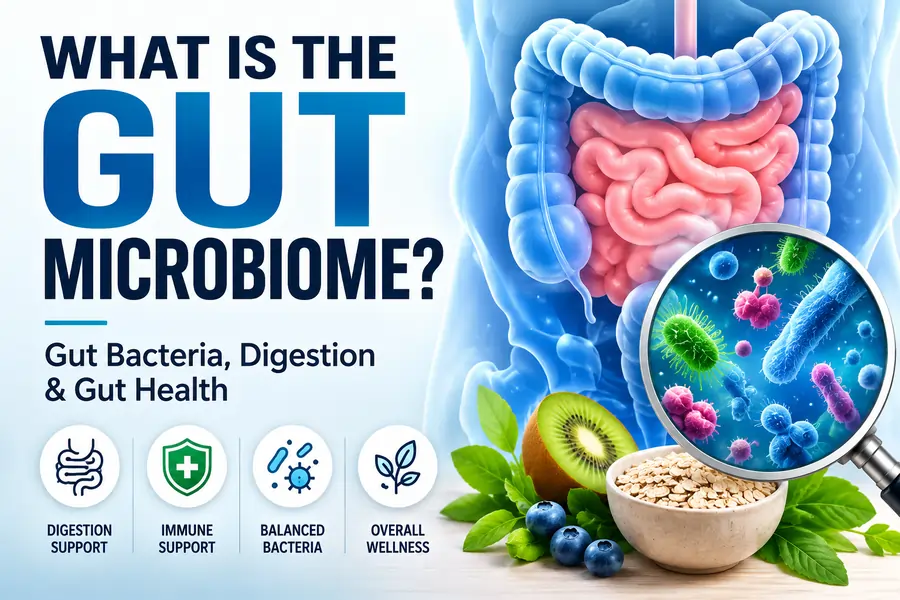
The gut microbiome is the community of bacteria, fungi, viruses, archaea and other microorganisms that live mainly in the intestines. These microbes help break down food, produce useful compounds, support the gut lining, interact with the immune system and influence digestive comfort.
A healthy gut microbiome is not about having one “good” bacterial strain. It is about having a balanced microbial community that can support digestion, regular bowel movements, nutrient processing and normal immune activity.
What Does Gut Microbiome Mean?
The gut microbiome means all the microorganisms and microbial genes living inside the digestive tract. Most people use the term to describe gut bacteria, but the full microbiome also includes fungi, viruses and other tiny organisms.
The largest microbial population is found in the large intestine. This is where many microbes interact with fibre, resistant starch, mucus, bile acids and other compounds from food and digestion.
The gut microbiome is different from person to person. Diet, age, medication use, illness, stress, sleep, bowel habits and long-term food patterns can all influence which microbes become more dominant.
Where Does The Gut Microbiome Live?
The gut microbiome lives throughout the digestive tract, but it is most concentrated in the colon. The stomach has fewer microbes because stomach acid limits microbial growth, while the large intestine provides a better environment for fermentation and microbial activity.
The digestive tract includes the mouth, oesophagus, stomach, small intestine, large intestine and rectum. Microbes can exist in several areas, but the colon is the main location discussed in gut health research.
This matters because the colon is where many fibres and plant compounds are fermented. That fermentation can produce short-chain fatty acids, including acetate, propionate and butyrate, which are often discussed in relation to gut lining support and digestive health.
What Does The Gut Microbiome Do?
The gut microbiome helps digest certain carbohydrates, produce microbial metabolites, support the gut barrier and communicate with the immune system. It does not replace digestion, but it adds another layer to how the body processes food.
| Gut Microbiome Function | What It Means In Plain English |
|---|---|
| Fermentation | Some gut microbes break down fibres and resistant starches that human enzymes cannot fully digest. |
| Short-chain fatty acid production | Microbial fermentation can produce compounds such as butyrate, acetate and propionate. |
| Gut barrier support | The microbiome interacts with the intestinal lining and mucus layer. |
| Immune interaction | A large part of immune activity is connected to the gut environment. |
| Digestive comfort | Microbial balance can influence gas, bloating, stool consistency and regularity. |
The gut microbiome is not a single organ, but it behaves like an active ecosystem. Microbes compete, cooperate and respond to what they are fed. That is why diet quality and food variety matter so much.
What Is A Balanced Gut Microbiome?
A balanced gut microbiome usually means a diverse and stable microbial community that supports normal digestion without allowing harmful organisms to dominate. Balance does not mean every person has the same bacteria.
Two people can both have healthy digestion while having different microbial profiles. The better question is not “which exact bacteria do I have?” but “is my gut environment supporting normal digestive function?”
A balanced gut microbiome is generally linked with:
- Regular bowel movements
- Less frequent digestive discomfort
- Better tolerance of fibre-rich foods
- A stronger gut barrier environment
- More microbial diversity
- Better use of prebiotic fibres
A less balanced gut environment is sometimes called dysbiosis. This means the microbial community has shifted in a way that may not support normal gut function. Dysbiosis is not something most people can diagnose by symptoms alone, but it is often discussed in relation to digestive problems, antibiotic use and low-fibre diets.
Can The Gut Microbiome Affect Bloating And Constipation?
Yes, the gut microbiome can influence bloating, gas and constipation because gut microbes help ferment food residues and affect the intestinal environment. However, these symptoms can also come from food intolerances, low fibre intake, dehydration, medication, stress or medical conditions.
Bloating often happens when gas builds up in the digestive tract. Some gas is normal. The problem is when gas production, movement or sensitivity becomes uncomfortable.
Constipation can involve slow stool movement, hard stools, straining or a feeling of incomplete emptying. Gut microbes are only one part of that picture. Fluid intake, fibre type, movement, routine and bowel habits also matter.
Important: Ongoing constipation, blood in stool, unexplained weight loss, severe abdominal pain, persistent diarrhoea or sudden bowel changes should be discussed with a qualified health professional.
What Do Most People Get Wrong About Gut Bacteria?
Most people think gut health is only about adding probiotics, but the gut microbiome also depends on what you feed it every day. A supplement may add selected strains, but food patterns shape the long-term gut environment.
This is why fibre, plant variety and regular eating habits matter. Gut microbes need substrates. In simple terms, they need material to work on.
For example, a person may take a probiotic but still eat very little fibre. In that case, the daily gut environment may not support the broader microbial community very well.
Another person may not take a probiotic at all, but may eat oats, legumes, vegetables, fruit, nuts, seeds and fermented foods regularly. That person may already be giving their gut microbes more useful inputs.
How Can You Support The Gut Microbiome?
You can support the gut microbiome by eating more fibre-rich plants, adding prebiotic foods gradually, staying hydrated, sleeping well and avoiding unnecessary disruption where possible. The goal is not to force instant change. The goal is to create a gut environment that supports microbial stability.
| Support Method | Why It Matters | Examples |
|---|---|---|
| Eat more fibre | Fibre feeds gut microbes and supports stool bulk. | Oats, beans, lentils, vegetables, berries, chia seeds |
| Add prebiotic foods | Prebiotics are food sources used by beneficial microbes. | Garlic, onion, asparagus, green banana, legumes |
| Include fermented foods | Some fermented foods contain live microbes or fermentation by-products. | Yoghurt, kefir, sauerkraut, kimchi |
| Increase slowly | Sudden fibre increases can worsen gas or bloating. | Add one new fibre source at a time |
| Hydrate properly | Fibre works better when fluid intake is adequate. | Water across the day |
For many people, the biggest mistake is doing too much at once. Jumping from a low-fibre diet to a high-fibre diet overnight can cause more bloating. A slower approach is usually easier to tolerate.
Do Gut Health Supplements Support The Gut Microbiome?
Gut health supplements may support the gut microbiome when they contain relevant probiotics, prebiotics, fibre or digestive-support ingredients, but they should not be treated as a replacement for diet. Their usefulness depends on the formula, the person and the digestive issue being targeted.
Some gut supplements focus on probiotics. Others focus on fibre, herbs, digestive enzymes or bowel regularity. This is why product categories need to be separated clearly.
A constipation-focused supplement is not the same as a daily probiotic. A bloating supplement is not the same as a fibre powder. A women’s gut microbiome formula may use a different angle again.
If you are comparing products, start with the problem first:
- Bloating: look at gas, fermentation, food tolerance and digestive comfort.
- Constipation: look at fibre, stool bulk, hydration and bowel movement support.
- General gut health: look at microbial support, fibre intake and long-term diet habits.
- Women’s gut health: look at digestive comfort, bloating, regularity and microbiome positioning.
Next step: If you are comparing supplement options, read our guide to whether gut health supplements work.
Gut Microbiome vs Gut Health: Are They The Same?
No, the gut microbiome is one part of gut health, but gut health also includes digestion, bowel function, gut lining, immune activity and symptom patterns. The microbiome is important, but it is not the whole story.
| Term | Meaning |
|---|---|
| Gut microbiome | The microbial community and microbial genes in the digestive tract. |
| Gut bacteria | The bacterial part of the gut microbiome. |
| Gut health | The broader condition of digestion, bowel function, gut lining and digestive comfort. |
| Probiotics | Live microorganisms used to support a specific health purpose when taken in adequate amounts. |
| Prebiotics | Fibres or compounds that feed beneficial microbes. |
This distinction matters for product reviews. A product can claim to support gut health without meaning it changes the entire microbiome. The exact ingredients and intended use need to be checked.
Who Should Pay More Attention To Their Gut Microbiome?
People with frequent bloating, irregular bowel movements, low fibre intake or recent antibiotic use may have more reason to pay attention to gut microbiome support. That does not mean every symptom is caused by gut bacteria.
A practical approach is to look at patterns. Occasional bloating after a large meal is different from daily bloating that affects comfort. Missing one bowel movement is different from ongoing constipation.
Gut microbiome support may be worth considering if:
- You eat very little fibre most days
- You often feel bloated after meals
- Your bowel movements are irregular
- You recently changed your diet
- You have used antibiotics recently
- You are comparing probiotic or digestive supplement options
Start with food, fluid and routine first. Supplements make more sense when you know what problem you are trying to solve.
When Should You Be Careful With Gut Health Advice?
You should be careful when gut health advice promises fast fixes, claims one ingredient can solve every digestive issue or ignores medical warning signs. Gut health is real, but it is often marketed too aggressively.
Be cautious with claims that say you can “reset” your gut overnight. The microbiome is dynamic, but meaningful changes usually depend on repeated inputs over time.
Also be careful with broad claims that connect every symptom to the gut. Fatigue, weight change, skin changes and mood changes can have many causes. Gut health may be relevant, but it should not be used as a catch-all answer.
Gut Microbiome FAQ
Is the gut microbiome the same as gut bacteria?
No. Gut bacteria are part of the gut microbiome, but the microbiome also includes fungi, viruses, archaea and microbial genes.
Can you improve your gut microbiome?
Yes, diet and lifestyle can influence the gut microbiome over time. Fibre-rich foods, plant variety, fermented foods, sleep and hydration can all support a healthier gut environment.
Are probiotics necessary for gut health?
No, probiotics are not always necessary for gut health. Some people may benefit from specific probiotic strains, but a fibre-rich diet is still one of the most important foundations.
What foods feed gut bacteria?
Fibre-rich plant foods feed many gut bacteria. Examples include oats, legumes, vegetables, fruit, nuts, seeds, whole grains and resistant starch foods.
Can the gut microbiome affect bowel movements?
Yes, the gut microbiome can influence stool consistency, gas production and bowel regularity. Bowel movements are also affected by fibre, fluid, movement, stress and medication.
How do I know if my gut microbiome is unhealthy?
You cannot confirm an unhealthy gut microbiome from symptoms alone. Frequent bloating, irregular bowel movements and poor tolerance of fibre may suggest your gut needs support, but ongoing symptoms should be assessed properly.
Do gut microbiome tests work?
Gut microbiome tests can identify some microbial patterns, but they do not always give clear treatment decisions for the average person. They may be interesting, but food habits and symptoms often matter more for practical next steps.
What is the best supplement for the gut microbiome?
The best supplement depends on the problem you want to address. A probiotic may suit one person, while a fibre-based product or digestive support formula may suit another.
Takeaway
The gut microbiome matters because it helps shape how your digestive system handles food, fibre, gas, stool regularity and immune communication.
It is one of the most important foundations of gut health, but it should be understood as part of a bigger digestive system.
The best starting point is not chasing one perfect probiotic. It is understanding what your gut microbes do, feeding them consistently and choosing supplements only when they match your actual digestive concern.
