
Most people immediately blame themselves when their breath smells bad even after brushing. They assume they are not brushing well enough, not using the right toothpaste, or not being careful enough after meals.
But persistent bad breath is not always a simple brushing problem. In many cases, the odor comes from areas that a toothbrush does not fully reach, such as the tongue, gumline, spaces between teeth, dry areas of the mouth, or the broader oral microbiome.
That is why some people can brush twice a day and still notice that the smell comes back within an hour.
Key Takeaway
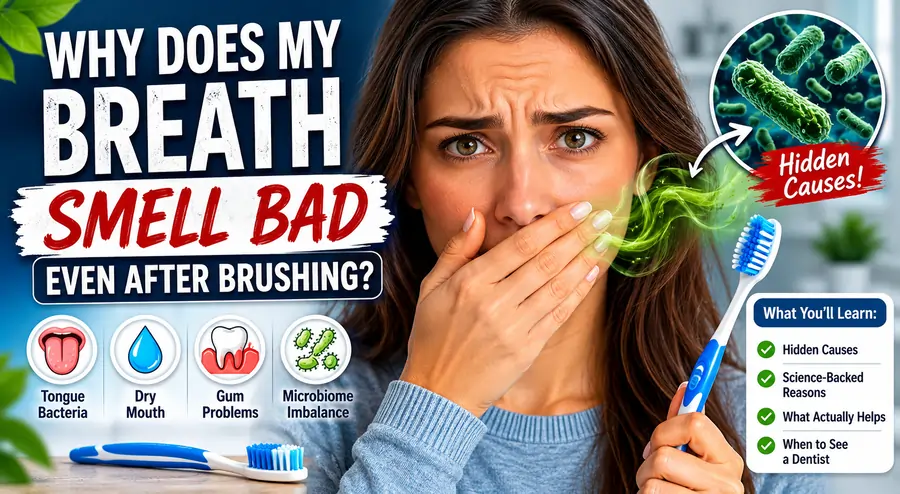
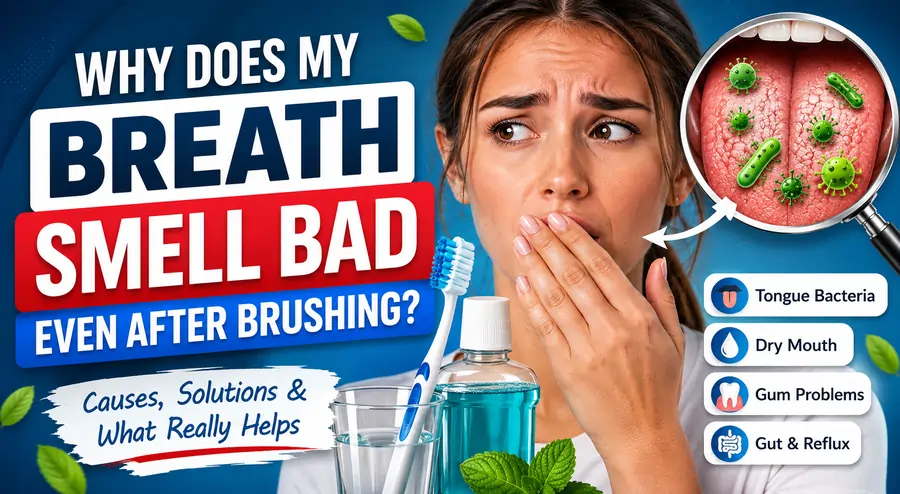
If your breath smells bad even after brushing, the cause may not be your teeth alone. Tongue bacteria, dry mouth, gum irritation, trapped food particles, tonsil stones, reflux, and changes in oral bacteria balance can all contribute to breath odor that brushing alone may not solve.
What Causes Bad Breath Even After Brushing?
Bad breath after brushing usually happens when odor-producing bacteria or odor sources remain in parts of the mouth that brushing does not fully clean.
Brushing is important. It removes plaque, food debris, and bacteria from tooth surfaces. But your teeth are only one part of the oral environment.
Your mouth also includes the tongue, saliva, gums, cheeks, throat, tonsils, dental work, and microbial communities that change throughout the day. When odor-producing compounds build up in any of these areas, breath can smell unpleasant even after the teeth feel clean.
| Possible Cause | Why Breath May Still Smell | Common Clue |
|---|---|---|
| Tongue coating | Bacteria can collect in tiny grooves on the tongue. | White or yellow coating on the tongue. |
| Dry mouth | Less saliva means less natural rinsing. | Worse breath in the morning or after coffee. |
| Gum problems | Bacteria may collect near or below the gumline. | Bleeding, swelling, tenderness, or bad taste. |
| Food trapped between teeth | Brushing misses debris that flossing removes. | Smell improves after flossing. |
| Oral microbiome imbalance | Certain odor-producing bacteria may become more dominant. | Freshness feels temporary despite routine hygiene. |
| Reflux or digestive factors | Odor may be influenced by stomach acid or digestive symptoms. | Sour taste, burping, heartburn, or throat irritation. |
The Common Mistake
Most people treat bad breath like a freshness problem. They add stronger mouthwash, stronger mints, or more gum. But if the source is tongue coating, dry mouth, gum pockets, or oral bacteria balance, masking the odor may only help for a short time.
Your Tongue May Be the Main Source of Bad Breath
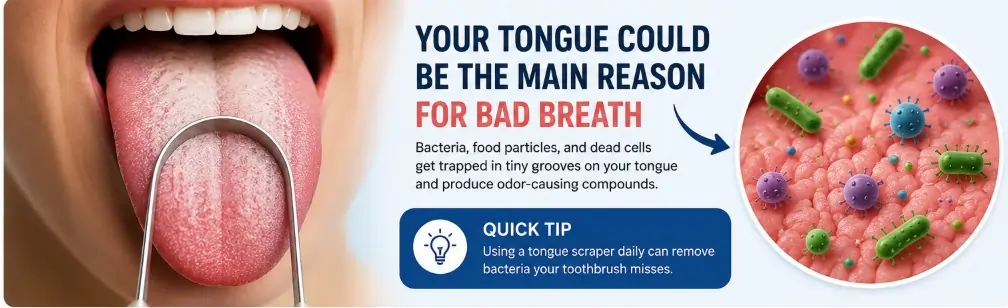
The tongue is one of the most overlooked sources of bad breath because its surface can hold bacteria, dead cells, and food residue even after the teeth are brushed.
Many people brush their teeth carefully but barely clean their tongue. That matters because the tongue is not smooth. It has texture, grooves, and tiny spaces where debris and bacteria can settle.
When these bacteria break down proteins and other material, they can create strong-smelling sulfur compounds. This is why breath can smell bad even when the teeth look clean.
Signs Your Tongue May Be Involved
Visible Coating
A white, yellowish, or thick coating on the tongue may indicate buildup that brushing your teeth will not remove.
Morning Odor
If breath is strongest after sleep, tongue bacteria and reduced saliva may both be contributing.
Bad Taste
A lingering unpleasant taste can sometimes come from bacterial buildup on the tongue or gumline.
Short-Lived Freshness
If mint or mouthwash helps briefly but the smell returns, the underlying source may still be present.
Dry Mouth Can Make Breath Worse
Dry mouth can contribute to bad breath because saliva helps rinse the mouth, control bacteria, and clear away food particles.
Saliva is one of the body’s natural oral cleaning systems. When saliva is reduced, bacteria and odor compounds can become more concentrated. The National Institute of Dental and Craniofacial Research notes that persistent dry mouth can also increase the risk of tooth decay and oral infections because saliva helps keep harmful germs in check.
This is one reason breath often smells worse in the morning. During sleep, saliva flow naturally decreases. If you also sleep with your mouth open or snore, the dryness can be even more noticeable.
Common Dry Mouth Triggers
| Trigger | How It May Affect Breath |
|---|---|
| Mouth breathing | Can dry oral tissues, especially overnight. |
| Caffeine | May contribute to a drier mouth in some people. |
| Dehydration | Less fluid intake can reduce saliva comfort. |
| Medications | Many medications can list dry mouth as a side effect. |
| Smoking or vaping | Can dry and irritate oral tissues. |
Gum Problems Can Cause Odor That Brushing Misses
Gum issues can contribute to persistent bad breath because bacteria may collect near or below the gumline where normal brushing does not fully reach.
If your gums bleed when you brush or floss, feel swollen, or look red and irritated, bad breath may be a sign that your gums need attention.
Mayo Clinic lists bad breath that will not go away among possible symptoms of periodontitis, along with swollen gums, gums that bleed easily, pus between teeth and gums, loose teeth, and painful chewing.
This is also why mouthwash can feel misleading. It may freshen the mouth temporarily, but if bacteria are collecting in gum pockets or around dental work, the smell may return.
The Oral Microbiome: The Part Most People Never Think About
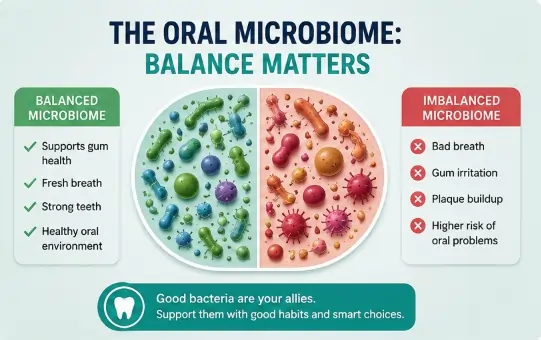
The oral microbiome is the community of bacteria and other microorganisms living in the mouth, and changes in that balance may influence breath freshness, gum comfort, and overall oral wellness.
Most people think the goal is to kill bacteria. But the mouth is not supposed to be sterile. It contains many bacterial species, and not all of them are harmful.
The more useful question is not, “How do I kill everything?”
It is, “What kind of environment is my mouth becoming?”
That shift in thinking is important. A person can brush and rinse every day, but still have an oral environment where odor-producing bacteria return quickly.
Research note: Scientists have studied oral bacteria and oral probiotics for decades as they investigate how different microbial communities may influence oral health, gum comfort, and breath freshness. This does not mean oral probiotics cure bad breath, but it explains why the oral microbiome has become a growing area of interest.
Why This Matters for Everyday Breath
If bad breath keeps returning, it may be because the daily routine is focused only on removing odor instead of changing the conditions that allow odor to return.
That is why some people become interested in oral probiotics, tongue cleaning, hydration, and gum health together rather than relying only on stronger mouthwash.
Curious About Oral Probiotics?
We reviewed ProDentim as part of our oral health cluster to explain how oral probiotic supplements are positioned and what to know before trying one.
Can Gut Health Affect Bad Breath?
Gut-related issues may contribute to breath odor in some situations, but most persistent bad breath starts inside the mouth.
This is where online advice often becomes confusing.
Some articles make it sound like all bad breath comes from the gut. That is not accurate. Oral causes such as tongue coating, gum problems, trapped food, and dry mouth are usually more likely.
However, digestive symptoms can sometimes be part of the picture. Cleveland Clinic notes that halitosis can occur due to oral hygiene issues or other health conditions, including dry mouth and acid reflux.
A Better Way to Think About It
Start with the mouth first: tongue, gums, flossing, saliva, dental work, and oral hygiene. If those are addressed and symptoms such as reflux, sour taste, burping, or throat irritation are present, then digestive factors may be worth discussing with a healthcare professional.
Why Mouthwash Often Works Only Temporarily
Mouthwash may freshen breath for a short time, but it may not solve bad breath if the odor source is still present on the tongue, gumline, between teeth, or in a dry oral environment.
Mouthwash can be useful. Some formulas help reduce bacteria, support gum health, or provide temporary freshness. The problem is when people use mouthwash as a cover-up instead of identifying the source.
Many people know the pattern:
- Rinse with mouthwash
- Feel fresh for a while
- Drink coffee or talk for an hour
- Start worrying again
- Reach for gum or mints
That cycle can become exhausting because it never answers the real question: where is the odor coming from?
What Can Help If Breath Still Smells Bad After Brushing?
The best next step is to match the solution to the likely source instead of simply adding more mint, gum, or mouthwash.
Bad breath is not one problem. It is a symptom with several possible causes. The more accurately you identify the cause, the less you have to guess.
| If You Notice… | Possible Source | What May Help |
|---|---|---|
| White coating on tongue | Tongue bacteria | Daily tongue scraping or tongue brushing. |
| Bad breath after waking | Dry mouth, mouth breathing, reduced saliva | Hydration, nasal breathing support, dentist discussion if persistent. |
| Bad smell between teeth | Trapped food particles | Consistent flossing or interdental cleaning. |
| Bleeding gums | Gum inflammation or gum disease | Dental cleaning and professional evaluation. |
| Freshness fades quickly | Oral environment or bacteria balance | Review full routine, tongue, saliva, gums, and oral microbiome support. |
| Sour taste or heartburn | Possible reflux | Discuss with healthcare professional. |
1. Clean Your Tongue
Use a tongue scraper or gently brush the tongue surface. This is often one of the highest-impact changes for people who already brush their teeth.
2. Floss Consistently
Food trapped between teeth can create odor that brushing does not reach. If floss smells unpleasant after use, that area may be contributing.
3. Support Saliva
Drink water, review caffeine intake, and talk to a professional if dry mouth is persistent or medication-related.
4. See a Dentist
If the odor is chronic or linked to bleeding, pain, swelling, or loose teeth, professional evaluation matters more than another product.
Where Oral Probiotics Fit In
Oral probiotics may be considered by people interested in supporting oral microbiome balance, but they should be viewed as an addition to oral hygiene, not a replacement for dental care.
This is where products like ProDentim enter the conversation. They are not toothpaste. They are not mouthwash. They are positioned around the idea of supporting beneficial bacteria in the oral environment.
For some readers, that angle is interesting because it addresses a common frustration: “I keep cleaning my mouth, but the freshness does not last.”
That does not mean oral probiotics are a guaranteed fix. Bad breath can come from many sources. But they belong in the broader discussion around oral bacteria, oral microbiome support, and fresh-breath routines.
Want to Compare the Oral Probiotic Angle?
Start with our ProDentim review, then compare it with our upcoming guides on oral probiotics, mouthwash, and bad breath supplements.
When Should You See a Dentist?
You should see a dentist if bad breath persists despite good oral hygiene or appears with bleeding gums, pain, swelling, pus, loose teeth, or a bad taste that does not go away.
Mayo Clinic recommends keeping the mouth and teeth clean to reduce bad breath and lower the risk of cavities and gum disease, but also notes that further treatment depends on the cause. If another health condition is suspected, a dentist may refer you to a healthcare professional or specialist.
Final Thoughts
If your breath smells bad even after brushing, the most important shift is to stop thinking only about your teeth and start thinking about the whole oral environment.
Your toothbrush can clean tooth surfaces, but it may not fully address tongue coating, dry mouth, gumline bacteria, trapped food, tonsil stones, reflux-related symptoms, or the balance of bacteria inside the mouth.
That is why persistent bad breath often requires a more complete approach.
Start with the basics: tongue cleaning, flossing, hydration, and dental checkups. Then consider whether your routine is only masking odor or actually addressing the environment where odor develops.
Bottom Line
Bad breath after brushing does not always mean you are dirty, careless, or doing everything wrong. It often means the source of odor is somewhere brushing alone does not fully reach.
Related Reading
To understand the bacteria-balance angle more deeply, read our upcoming guide on what the oral microbiome is.
If you are researching oral probiotics, see our ProDentim review for a product-specific breakdown.
Frequently Asked Questions
Why does my breath smell bad even after brushing and mouthwash?
Breath can still smell bad after brushing and mouthwash if the odor source remains on the tongue, between teeth, below the gumline, in a dry mouth, or from another health-related factor.
Can tongue bacteria cause bad breath?
Yes. Tongue coating is one of the most commonly overlooked contributors to bad breath because bacteria can collect in the tiny grooves on the tongue surface.
Is bad breath always caused by poor hygiene?
No. Poor hygiene can cause bad breath, but some people with good brushing habits still experience odor due to dry mouth, gum problems, tongue coating, reflux, or other factors.
Does dry mouth make breath smell worse?
Yes. Dry mouth can make breath worse because saliva helps rinse the mouth and control bacterial buildup. When saliva is reduced, odor compounds may become more noticeable.
Can gut health affect bad breath?
Gut-related issues may contribute in some cases, especially when symptoms such as reflux, sour taste, or frequent burping are present. However, most persistent bad breath begins inside the mouth.
Do oral probiotics help with bad breath?
Oral probiotics are being studied for their potential role in supporting oral microbiome balance. They may interest people looking beyond mouthwash and mints, but results vary and they should not replace dental care.
When should I worry about bad breath?
Bad breath should be evaluated by a dentist if it is persistent, worsening, or linked with bleeding gums, tooth pain, swelling, pus, loose teeth, or a bad taste that does not go away.
