
Phytomem One is a once-daily brain-support supplement designed for adults interested in memory, focus and mental clarity, combining ten botanical and marine-derived ingredients in one tablet.
Forgetting a familiar name, losing track of a conversation or finding it harder to concentrate can make people more interested in everyday cognitive wellness.

Sleep, stress, medication, nutrition and medical conditions can all affect thinking and recall. This is one reason brain-support supplements attract attention from adults who want to maintain healthy routines as they get older.
Phytomem One takes a broader approach than a single-ingredient supplement. It combines saffron extract and seaweed-derived compounds with ingredients commonly studied for metabolic health, such as berberine and Ceylon cinnamon.
In this Phytomem One review, we examine its ingredients, how the formula is designed to work, the research behind its key compounds, expected benefits, pricing, and whether it is worth considering for daily cognitive support.
Phytomem One Review
Phytomem One has an appealing multi-ingredient design for adults exploring nutritional support for everyday memory and concentration.
Its once-daily tablet, selection of botanicals and marine compounds, and lower per-bottle prices on larger packages make it a product worth examining alongside other brain supplements.
Best for
- Adults interested in daily cognitive wellness
- Buyers who prefer botanical and marine ingredients
- People who favour a one-tablet routine
Not ideal for
- Treating dementia or another medical condition
- Replacing professional assessment of worsening memory
- Anyone advised to avoid its ingredients
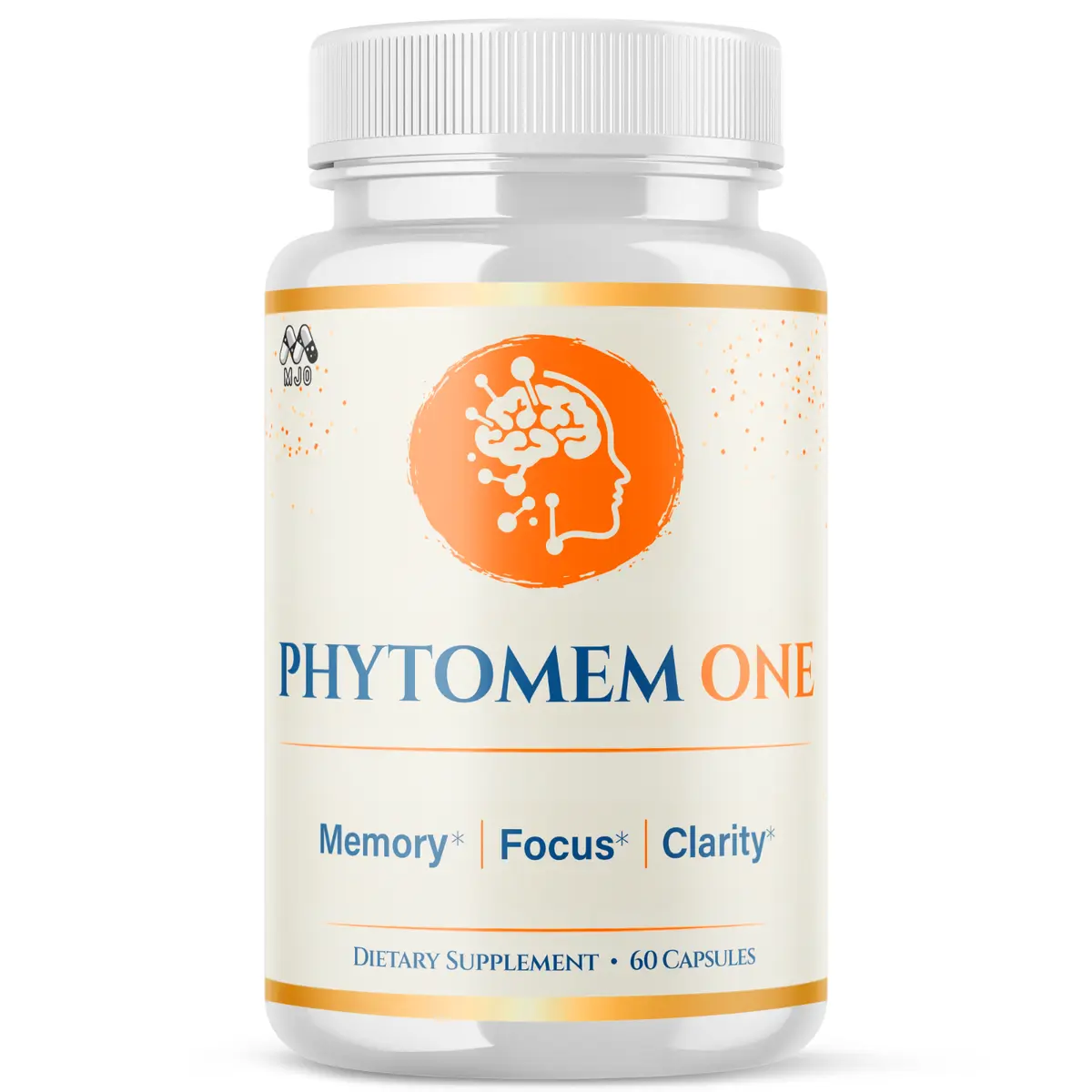
Quick answer: Phytomem One contains ten listed ingredients, is advertised as one tablet per day, and comes in two-, three- and six-bottle packages. Its main appeal is a combination of saffron, marine compounds and plant extracts rather than a stimulant-based approach.
What Is Phytomem One?
Phytomem One is a dietary supplement marketed for memory, concentration and general brain wellness. It contains ten named ingredients organised by the seller into three formulation groups.
The product is presented as a non-stimulant supplement for adults who prefer a consistent daily routine. The advertised serving is one tablet per day, with 30 tablets in each bottle.
Its formula combines several ingredient categories. Saffron provides a traditional botanical component with a growing research record. Fucoxanthin and fucoidan come from marine sources. Olive-leaf compounds add another source of polyphenols. Berberine, cinnamon and banaba introduce ingredients associated with metabolic research.
This variety is central to the product’s appeal. Rather than positioning one ingredient as the complete answer to better focus, the manufacturer presents Phytomem One as a broader nutritional formula.
Why Do Adults Look for Memory and Brain-Support Supplements?
Adults often become interested in memory supplements when everyday recall, attention or mental energy feels different from what they are used to.
Occasional forgetfulness is common, but it has many possible explanations.
Someone might struggle to remember a name during a busy workday. Another person may find concentration harder after several nights of poor sleep. Older adults may be more conscious of maintaining cognitive function as part of healthy ageing.
These experiences create interest in products marketed for memory, mental clarity and attention. They do not, by themselves, establish a need for supplements: sleep, physical activity, diet, stress and medical factors also deserve consideration.
Phytomem One is aimed at adults exploring the nutritional side of cognitive wellness. Its ingredient categories make the most sense when viewed as complementary to established health habits, not as a replacement for them.
How Does Phytomem One Work?
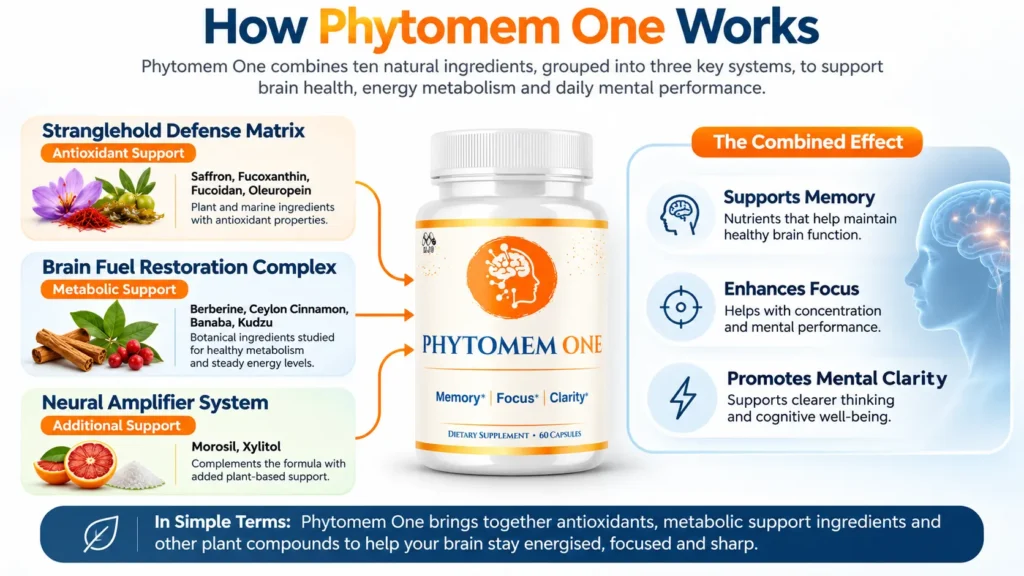
Phytomem One combines ten plant-based and marine-derived ingredients selected to support memory, focus, and overall brain health.
The formula brings together ingredients such as saffron, fucoxanthin, and oleuropein, which have been studied for their antioxidant properties, along with berberine and cinnamon, which are associated with metabolic health.
To explain how these ingredients work together, the manufacturer divides the formula into three groups, each with a different purpose.
1. Stranglehold Defense Matrix: Antioxidant Support
This group contains saffron, fucoxanthin, fucoidan, and oleuropein.
These ingredients come from plants and seaweed and are known for compounds with antioxidant properties. Antioxidants help protect cells from oxidative stress, which can contribute to ageing and cellular damage.
The manufacturer includes these ingredients as part of its approach to supporting long-term brain health.
2. Brain Fuel Restoration Complex: Metabolic Support
This group combines berberine, Ceylon cinnamon, banaba, and kudzu flower extract.
Several of these ingredients have been studied for their role in blood sugar regulation and metabolism.
Since the brain relies on a steady supply of energy to function, the manufacturer includes these ingredients to complement the formula’s other brain-support compounds.
3. Neural Amplifier System: Additional Ingredients
The final group contains Morosil and xylitol.
Morosil is a red-orange extract studied mainly for its effects on metabolism and body composition, while xylitol is a sugar alcohol commonly used as a sweetener.
These two ingredients complete Phytomem One’s ten-ingredient formula.
Key Point Phytomem One combines several ingredient groups, making saffron, marine compounds and metabolic botanicals its main points of interest.
What Makes Phytomem One Different From Other Brain Supplements?
Phytomem One stands out for combining ten ingredients from several nutritional categories in a one-tablet daily formula. Its formulation is broader than products built around only one or two active ingredients.
The most recognisable points of difference are its combination of saffron and seaweed-derived compounds, its inclusion of metabolic-health botanicals, and its three-group presentation.
| Feature | Phytomem One approach |
|---|---|
| Daily format | One advertised tablet daily; 30 per bottle |
| Ingredient range | Ten named ingredients |
| Botanical component | Saffron, olive-leaf compound, cinnamon, kudzu and banaba |
| Marine component | Fucoxanthin and fucoidan |
| Purchase flexibility | Two-, three- and six-bottle offers |
| Refund offer | Advertised 60-day money-back guarantee |
For a buyer comparing ingredient lists, this gives Phytomem One a clear identity: it is a broad botanical-and-marine formula for general cognitive wellness rather than a caffeine-based quick boost.
Phytomem One Ingredients Explained
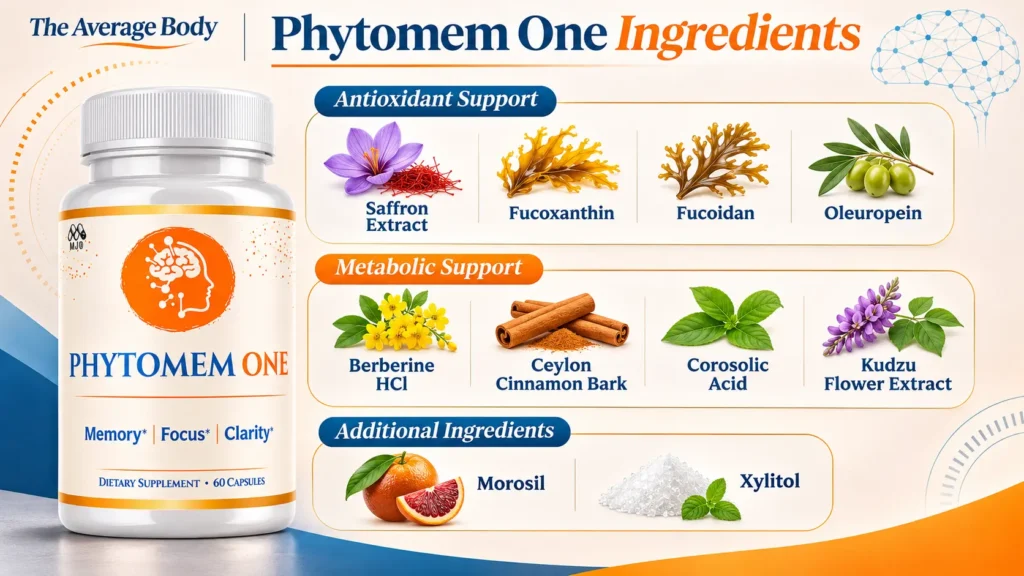
The ten listed Phytomem One ingredients are saffron extract, fucoxanthin, fucoidan, oleuropein, berberine HCl, Ceylon cinnamon bark, corosolic acid, kudzu flower extract, Morosil red-orange extract and xylitol.
| Ingredient | What it is | Why it is relevant |
|---|---|---|
| Saffron extract | Extract from Crocus sativus | Examined in human studies involving cognition and mood |
| Fucoxanthin | Marine carotenoid | Studied in microalgae preparations and cognitive research |
| Fucoidan | Polysaccharide from brown seaweed | Investigated for several biological properties |
| Oleuropein | Olive-derived polyphenol | Associated with antioxidant research |
| Berberine HCl | Plant-derived alkaloid | Widely examined in glucose and lipid metabolism research |
| Ceylon cinnamon bark | Cinnamomum verum botanical | Studied for its relationship with metabolic measures |
| Corosolic acid | Compound found in banaba | Investigated in glucose-metabolism research |
| Kudzu flower extract | Botanical extract containing isoflavones | Adds another category of plant compounds |
| Morosil | Sicilian red-orange extract | Studied primarily in metabolic and body-composition contexts |
| Xylitol | Sugar alcohol | Commonly used as a sweetening ingredient |
Saffron Extract: A Botanical With Human Cognitive Research
Saffron is obtained from the Crocus sativus flower. It contains compounds such as crocin and crocetin that have attracted scientific interest in relation to antioxidant activity and brain health.
Among the ingredients listed for Phytomem One, saffron has some of the more directly relevant human cognitive research. That makes it a sensible starting point for anyone examining the product’s ingredient rationale.
Fucoxanthin: The Marine Carotenoid
Fucoxanthin occurs in certain brown algae and microalgae. Research has examined preparations containing fucoxanthin for metabolic processes and selected measures of cognitive performance.
This marine ingredient is less familiar than ginkgo or B vitamins, giving Phytomem One a distinctive research topic for buyers interested in less conventional brain-support ingredients.
Fucoidan: A Seaweed-Derived Polysaccharide
Fucoidan is a family of complex carbohydrates extracted from certain brown seaweeds. Much of the research concerns laboratory or animal models and various biological activities.
In Phytomem One, fucoidan broadens the marine ingredient group alongside fucoxanthin. The two are different substances and should not be treated as interchangeable.
Oleuropein: A Polyphenol From Olives
Oleuropein is a compound associated with olive fruit and olive leaves. Its antioxidant and metabolic properties have been studied in experimental and nutritional research.
Olive-derived compounds are commonly discussed within Mediterranean dietary research. Including oleuropein brings that botanical category into the Phytomem One formula.
Berberine HCl: A Metabolic Research Ingredient
Berberine is an alkaloid found in several plants. Clinical research has examined it primarily in relation to blood glucose, insulin resistance and lipid measures, not as a proven memory treatment.
Its inclusion gives Phytomem One a different profile from formulas built exclusively around cognitive botanicals. Berberine is also the ingredient that makes a medication check especially important before purchase.
Ceylon Cinnamon Bark and Corosolic Acid
Ceylon cinnamon comes from Cinnamomum verum. Corosolic acid is associated with banaba leaves. Both appear in nutritional research dealing with metabolic health.
These ingredients sit alongside berberine in the manufacturer’s second formulation group and explain the product’s interest in metabolic processes.
Kudzu Flower, Morosil and Xylitol
Kudzu flower provides plant compounds known as isoflavones. Morosil is a branded Sicilian red-orange extract associated with research on metabolic and body-composition measures. Xylitol is a sugar alcohol widely used for sweetness.
These ingredients complete the advertised ten-ingredient list. Together they give the product a wider botanical and nutritional profile than a conventional single-extract supplement.
Research Behind the Ingredient Selection
Published studies involving saffron and fucoxanthin-containing preparations provide useful context for two of the most interesting ingredients in Phytomem One.
Together, they explain why these compounds attract attention in cognitive-wellness research.
What Does Scientific Research Say About the Ingredients?
Human studies provide relevant context for saffron and certain fucoxanthin-containing microalgae preparations.
The studies examine particular ingredient preparations and help explain the research background of the formula.
Saffron: A 2010 Clinical Trial and a 2020 Research Review
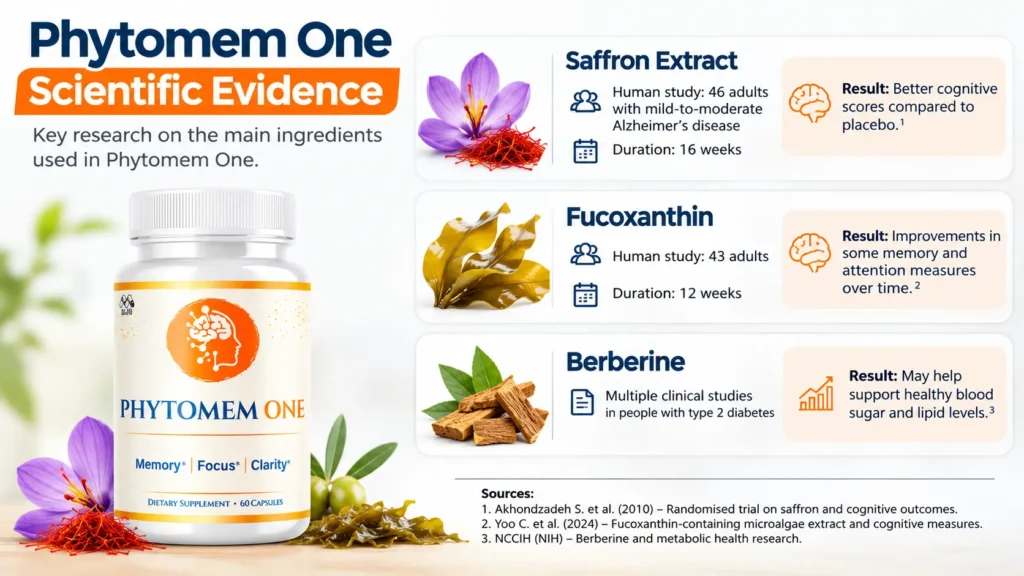
In 2010, Akhondzadeh and colleagues studied 46 people with mild-to-moderate Alzheimer’s disease in a 16-week randomised trial.
Participants received saffron at 30 mg per day or placebo. The saffron group had better scores on the cognitive measures reported in that trial.
A 2020 systematic review examined five saffron trials involving 325 participants and described the results as encouraging while calling for larger, better-controlled studies.
These are studies of saffron preparations, not evidence that Phytomem One treats Alzheimer’s disease.
Fucoxanthin: Human Studies in 2024 and 2025
A 2024 randomised trial involved 43 adults who completed a 12-week intervention using a microalgae preparation containing 8.8 mg of fucoxanthin daily.
Researchers reported encouraging changes in some memory and attention measures, although many changes occurred over time rather than as clear differences from placebo.
A 2025 trial examined 66 older adults over 24 weeks using another microalgae preparation containing 4.4 mg of fucoxanthin. The primary cognitive outcome did not differ significantly between treatment and placebo groups, though some measures improved within the treatment group.
These studies make fucoxanthin worth learning about, while showing why the exact preparation, dose and outcome being measured are important when interpreting supplement research.
Berberine: Evidence Relating to Metabolic Health
The US National Centre for Complementary and Integrative Health summarises research suggesting that berberine may affect certain glucose and lipid measures in people with type 2 diabetes. Study quality and results vary.
This provides context for why berberine appears in the formula’s metabolic ingredient group.
What Benefits Is Phytomem One Designed to Provide?
Phytomem One is advertised for everyday memory, mental clarity and concentration, with ingredients selected from botanical, marine and metabolic research.
Its intended role is general cognitive wellness rather than medical treatment.
| Advertised goal | How the formula relates to it |
|---|---|
| Memory and recall | Saffron and fucoxanthin are relevant to published cognitive studies |
| Everyday focus | The seller positions the formula around concentration and daily mental clarity |
| Healthy ageing | Includes plant compounds commonly discussed in antioxidant research |
| General metabolic wellness | Contains berberine, cinnamon and banaba-associated corosolic acid |
| Simple routine | One advertised tablet per day |
The strongest case for considering the product is the mix of ingredient categories and ease of daily use.
Buyers who prefer a single familiar ingredient may favour another supplement; those interested in a broader formula may find Phytomem One more appealing.
What Results Should Users Reasonably Expect?
Phytomem One is intended for routine nutritional use, not an instant change in memory or concentration. You can’t predict individual experiences from the ingredient list alone.
A sensible way to evaluate any daily supplement is to consider whether it suits the person’s routine, whether its ingredients are appropriate and whether its cost fits the budget.
Sleep quality, stress levels, physical activity and underlying health conditions can influence cognitive performance independently of supplement use.
For example, someone with mild concentration difficulties during a demanding work period may want to examine sleep and work habits alongside any supplement.
A person with new, worsening or persistent memory symptoms needs clinical assessment rather than relying on a brain-support product.
The advertised 60-day refund period is a purchasing feature, not a guaranteed timeframe for cognitive changes.
“Phytomem One brings together saffron, marine compounds and metabolic botanicals in one daily tablet, offering a broader ingredient approach than many simple brain-support formulas.”
Editorial assessment
Phytomem One vs Neuriva Original: How Do They Compare?
Phytomem One and Neuriva Original both target everyday brain wellness, but they use substantially different ingredient strategies.
Phytomem One contains ten named ingredients, while Neuriva Original centres on coffee fruit extract and phosphatidylserine.
| Feature | Phytomem One | Neuriva Original |
|---|---|---|
| Primary category | Daily brain and memory support | Daily brain-health support |
| Named core ingredients | Ten, including saffron, fucoxanthin, oleuropein and berberine | Coffee fruit extract (NeuroFactor) and phosphatidylserine |
| Formula approach | Botanical, marine and metabolic ingredient combination | More concentrated set of ingredient types |
| Serving style | One advertised tablet per day | Original capsule product; follow current pack directions |
| Better suited to buyers who prefer | A broad ingredient list with several research categories | A simpler formula centred on coffee fruit and phosphatidylserine |
Neuriva’s manufacturer identifies coffee cherry extract and phosphatidylserine as the core ingredients in its Original product.
Phytomem One’s distinction is its much wider ingredient range, including marine compounds not found in the referenced Neuriva Original formulation.
The two supplements take different approaches to ingredient selection. For buyers specifically interested in saffron, fucoxanthin and complementary plant compounds, Phytomem One is the more directly relevant formula to inspect.
Who Should Consider Phytomem One?
Phytomem One may appeal to adults who want a once-daily supplement featuring several botanical and marine ingredients associated with cognitive and general wellness research.
May be a good fit
- Adults interested in everyday memory and focus support
- Buyers researching saffron and fucoxanthin
- People who prefer a multi-ingredient tablet
- Customers comparing longer-term bundle prices
Check suitability first
- People using prescription medicines, especially blood-glucose medicines
- Anyone who is pregnant or breastfeeding
- People with new or worsening memory problems
- Anyone with an allergy or sensitivity to listed ingredients
Important: Because the formula lists berberine, people taking medication should check with a clinician or pharmacist first. The NIH advises against using berberine during pregnancy or breastfeeding.
How Do You Take Phytomem One?
Phytomem One is advertised as a one-tablet daily supplement, with 30 tablets per bottle. Buyers should follow the instructions on the actual product label for timing and use.
This is a practical selling point for adults who prefer not to manage multiple capsules throughout the day. A 30-tablet bottle represents approximately 30 days at the advertised serving.
Anyone already taking supplements or medicines should review the complete ingredient list to avoid unnecessary overlap or interactions.
Phytomem One Price: Which Package Offers the Best Value?
Phytomem One was advertised at US$79 per bottle in the two-bottle Starter package, US$59 in the three-bottle Advanced package and US$49 in the six-bottle Ultimate package. The Ultimate package has the lowest displayed unit cost.
| Package | Total Price | Cost Per Bottle |
|---|---|---|
| Starter (2 bottles) | US$158 | US$79 |
| Advanced (3 bottles) | US$177 | US$59 |
| Ultimate (6 bottles) | US$294 | US$49 |
At the advertised prices, moving from Starter to Ultimate reduces the bottle price by US$30, a difference of about 38% per bottle.
The larger purchase also requires a higher total payment, so the best choice depends on whether a buyer wants a smaller order or a longer supply.
The supplied sales material advertises bonus digital reading materials and a 60-day money-back guarantee. Shipping fees, availability and refund conditions should be checked at checkout.
Compare the Current Phytomem One Offers
Review the latest available packages, checkout totals and purchase terms.
Where Can You Buy Phytomem One?
Phytomem One is promoted through an online product offer with package selection and checkout. Readers can use the linked offer to check current pricing and purchasing conditions.
Because multiple websites use similar Phytomem One names and branding, buyers should confirm the seller identity, product label, payment processor and refund contact details on the destination page before ordering.
Our link directs readers to the current promoted offer; it is an affiliate link rather than a claim that The Average Body operates the manufacturer’s website.
Final Verdict: Is Phytomem One Worth Buying?
Phytomem One is worth considering for adults interested in a broad botanical-and-marine brain-support supplement that fits a one-tablet daily routine. Its ten listed ingredients and three purchase packages provide clear points to assess before ordering.
Its strongest distinguishing feature is ingredient variety. Saffron has been studied in human cognitive trials, fucoxanthin has appeared in research using marine preparations, and the metabolic botanicals give the formula a different character from simple two-ingredient memory supplements.
The pricing structure is straightforward: Starter suits a smaller initial order, while Ultimate has the lowest advertised cost per bottle. The 60-day refund offer is another reason to examine the terms of the current promotion.
For buyers who prefer a multi-ingredient approach to general cognitive wellness, Phytomem One is an interesting option to compare with more familiar brain-support products.
Our Final Rating
Best for: Adults comparing broad botanical and marine ingredient formulas for daily cognitive wellness.
Interested in Phytomem One?
Check package availability, current pricing and seller terms before purchasing.
Frequently Asked Questions
What is Phytomem One used for?
Phytomem One is marketed as a daily brain-support supplement for adults interested in memory, focus and mental clarity. Its formula combines ten botanical, marine and other ingredients.
Does Phytomem One work?
Phytomem One contains ingredients examined in nutritional and cognitive research, including saffron and fucoxanthin. Published studies involving saffron and fucoxanthin provide background on these ingredients, while individual experiences with supplements can vary.
What are the ingredients in Phytomem One?
The advertised list contains saffron extract, fucoxanthin, fucoidan, oleuropein, berberine HCl, Ceylon cinnamon bark, corosolic acid, kudzu flower extract, Morosil red-orange extract and xylitol.
How much does Phytomem One cost?
In the reviewed sales material, prices start at US$49 per bottle with a six-bottle purchase. The two-bottle and three-bottle offers are US$79 and US$59 per bottle respectively.
Is Phytomem One a stimulant?
The promotional material describes Phytomem One as a stimulant-free formula. Check the current product label for the complete ingredients and any changes to the formulation.
How long does Phytomem One take to work?
No verified time to a cognitive benefit can be established for Phytomem One from the provided product information. The advertised use is one tablet daily, and users should not assume an immediate or guaranteed result.
Is Phytomem One safe?
Suitability depends on an individual’s health and medications. The listed ingredient berberine can interact with medicines and should not be used during pregnancy or breastfeeding. Ask a pharmacist or clinician before taking the product if these circumstances apply.
Where is the Phytomem One official website?
The Phytomem One offer link leads to the promoted purchasing page. Confirm the seller and checkout details at the destination, as several similarly named sites appear online.
Does Phytomem One have a money-back guarantee?
Yes. The reviewed sales presentation advertises a 60-day money-back guarantee. Buyers should read the current refund conditions before ordering.
Scientific Research and Sources
- Akhondzadeh S. et al. (2010). Saffron and cognitive outcomes in a 16-week randomised trial.
- Avgerinos K. et al. (2020). Systematic review of saffron clinical trials and cognition.
- Yoo C. et al. (2024). Fucoxanthin-containing microalgae extract and cognitive measures.
- Goodbody E. et al. (2025). Microalgae supplementation and memory measures in older adults.
- US National Center for Complementary and Integrative Health. Berberine, metabolic research and safety information.
- Schiff Vitamins. Neuriva Original ingredient information.
Affiliate disclosure: The Average Body may earn a commission if a purchase is made through a product link, without an additional charge to the buyer.
